Introduction
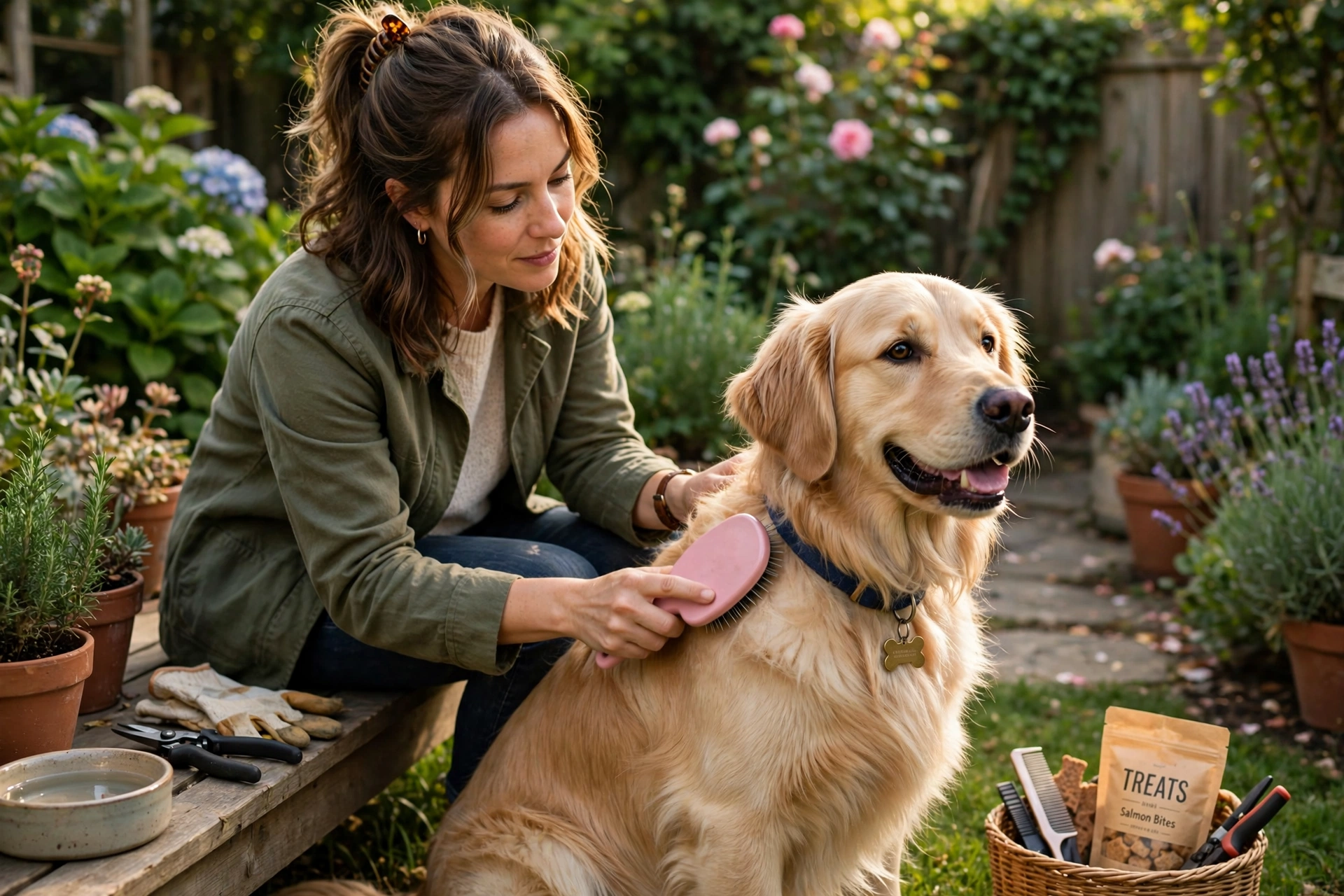
Grooming is much more than keeping a dog looking nice. Regular grooming keeps skin healthy, catches problems early, reduces shedding around the home, and builds trust between a dog and its owner. A dog that is used to being brushed, bathed and handled is also much easier for a veterinarian or a groomer to examine.
This guide covers home grooming for beginners: bathing, brushing different coat types, trimming nails, cleaning ears, and basic dental care. It uses gentle, simple methods that any owner can learn. It is general information for dog owners, not a replacement for veterinary advice. If your dog has a skin problem, an ear infection, or a painful nail, ask your veterinarian before grooming that area.

Donate Now
Why grooming matters
A dog’s coat and skin are its first line of defence. Dirt, loose hair and tangles can hide skin problems, cause itching, and lead to painful mats that pull the skin. Regular brushing removes loose hair and dirt, spreads natural oils through the coat, and lets you check the skin for lumps, cuts, ticks, fleas or sore patches. Early discovery means early treatment.
Grooming is also a health check. While brushing, you can feel for lumps, check the ears for smell or discharge, look at the teeth, and check the paws for cuts or cracked pads. Dogs that are groomed regularly are calmer about being handled, which makes vet visits and grooming appointments much easier.
Brushing: the foundation of grooming
How often to brush depends on the coat. Short coated dogs usually need brushing once a week. Medium and long coated dogs need brushing two or three times a week. Dogs with thick double coats, such as huskies and shepherds, shed heavily twice a year and need brushing almost daily during shedding season. Curly coated dogs, such as poodles, need regular brushing to prevent mats.
Use the right brush for the coat. A bristle brush suits short coats. A slicker brush, with fine wire pins, suits medium and long coats and helps remove tangles. A de-shedding tool helps thick double coats during shedding. A wide toothed comb is useful for checking for tangles after brushing, especially behind the ears, under the legs and around the collar, where mats form first.
Brush gently, in the direction of hair growth, and never pull hard at a tangle. Hold the base of a tangle with your fingers so the skin is not pulled, and work it out slowly with a comb. If a mat is too tight to comb out, it may need to be cut carefully with blunt tipped scissors, or removed by a groomer. Praise and reward the dog during brushing, especially at first, so grooming becomes a pleasant experience.
Start brushing a puppy early, with short, gentle sessions and lots of praise, so the dog grows up enjoying it. Even a few minutes a few times a week will teach a puppy that grooming is normal and safe.
Bathing: how often and how
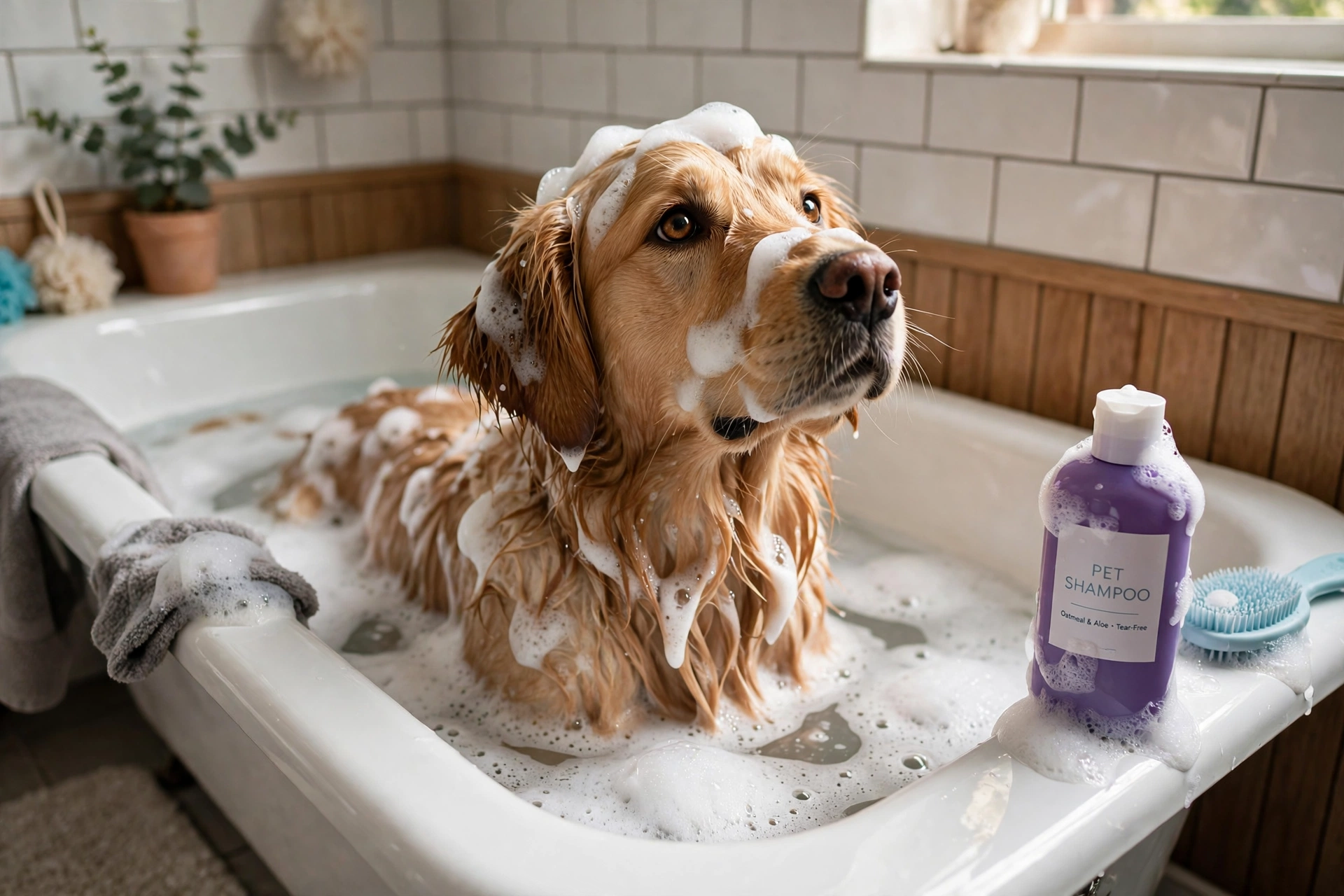
Most dogs need a bath every four to six weeks, or when they are dirty or smelly. Bathing too often can strip natural oils and dry the skin, while bathing too rarely lets dirt and smell build up. Dogs with skin problems may need a special shampoo and a schedule set by the vet.
Always use a shampoo made for dogs. Human shampoo is too acidic for a dog’s skin and can cause itching and dryness. Wet the dog thoroughly with lukewarm water, avoiding the eyes and the inside of the ears. Work the shampoo into a lather, massage gently, and rinse very well, as leftover shampoo can irritate the skin. Dry the dog with towels, and keep it indoors until fully dry, especially in cold weather. A hair dryer on a low, cool setting can help long coated dogs, but never use a hot dryer close to the skin.
Make bath time calm. Put a non slip mat in the bath or tub, speak gently, and reward the dog afterwards. If your dog is frightened of the bath, introduce it slowly: first let the dog stand in the dry tub with treats, then add a little water, and build up over several sessions. Never force a frightened dog into water.
Nail trimming: slow and safe
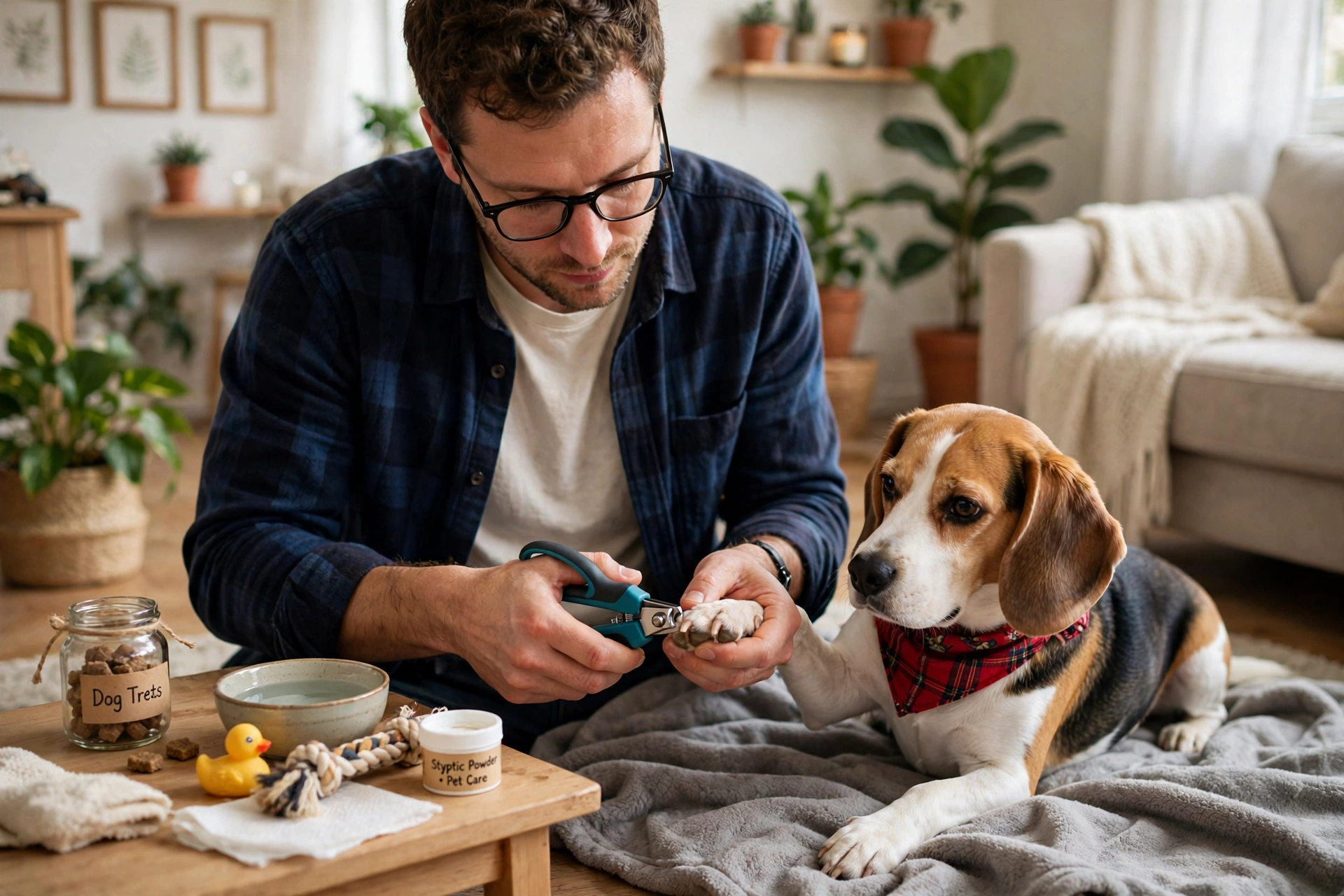
Long nails can make walking uncomfortable, change how a dog stands, and even cause injury. Most dogs need their nails trimmed every three to four weeks, or when you can hear them clicking on a hard floor. Dogs that walk a lot on pavements may wear their nails down naturally and need trimming less often.
Use nail clippers or a nail grinder made for dogs. Trim a tiny amount at a time, and watch the nail: in light nails you can see the pink quick inside, and you must not cut into it. In dark nails, trim very small amounts and stop when you see a dark centre appearing. If you do cut the quick, it will bleed: stay calm, press a clean cloth or a little styptic powder on the nail until it stops. If bleeding does not stop, call the vet.
If your dog hates nail trimming, go slowly. Start by touching the paws and rewarding calm behaviour for a few days, then hold the clippers near the paw, then trim one nail and reward, and build up from there. If you are nervous, ask your vet or a groomer to show you the first time, or to trim the nails for you. There is no shame in getting help with this.
Cleaning ears
Healthy ears need little care, but a quick check each week is a good habit. Look inside the ear: it should be clean and pink, with no bad smell and no dark discharge. Dogs with floppy ears, dogs that swim, and dogs with allergies are most likely to get ear infections.
To clean, use an ear cleaner made for dogs, never water, alcohol or human ear drops unless the vet tells you to. Put a little cleaner into the ear, massage the base gently, then let the dog shake its head, and wipe the outer ear with a cotton ball or a soft cloth. Never push anything deep into the ear canal, and never use a cotton bud inside the ear. If the ear is red, swollen, smelly, or the dog is in pain, do not clean it yourself, see a vet, as it may be infected.
Dental care at home
Dental disease is one of the most common health problems in dogs, and it builds slowly. Plaque and tartar collect on the teeth, gums become inflamed, and over time the dog can develop painful gum disease and loose teeth. Daily care at home makes a real difference.
Brush your dog’s teeth with a toothbrush and toothpaste made for dogs, ideally every day, or at least several times a week. Never use human toothpaste, as it can be harmful if swallowed. Start slowly: let the dog taste the toothpaste, then rub a little on the outer teeth with your finger, then use the brush. Focus on the outer surfaces, where plaque builds most. Approved dental chews can help too, but they are not a replacement for brushing. Have the vet check the teeth at every visit.
Paw and pad care
Check paws regularly for cuts, thorns, cracked pads and objects stuck between the toes. After walks in winter, rinse paws to remove salt and grit, which can irritate the skin. In very hot weather, pavements can burn pads, so walk on grass or in the cooler parts of the day. Trim the hair between the toes if it gets matted, and keep nails short so the dog stands comfortably.
If a pad is cut or cracked, keep it clean and dry, and see a vet if it bleeds heavily, swells, or the dog will not put weight on it. A dog boot or a clean sock can protect a sore paw on short walks while it heals.
Grooming different coat types
Short coats are the easiest: a weekly brush with a bristle brush and a bath when dirty is usually enough. Medium coats need brushing two or three times a week to remove loose hair and prevent tangles. Long coats need regular brushing, almost daily for some breeds, and the hair behind the ears, under the legs and around the tail needs special attention.
Double coated breeds have a thick undercoat and a longer top coat. They shed heavily twice a year, and during shedding they need daily brushing with a de-shedding tool. Never shave a double coated dog, as the coat protects against both heat and cold, and shaving can damage it permanently. Curly and wavy coats, such as poodles and doodles, need brushing several times a week and regular professional clipping to prevent mats.
When to see a professional groomer
Some jobs are best left to a professional groomer: full clipping, de-matting, hand stripping, and breed specific cuts. A groomer also has the right tools and experience for difficult dogs. A visit every six to eight weeks is common for breeds that need clipping, while other breeds may only need a groomer a few times a year.
Choose a groomer who is gentle, patient and experienced, and ask to see the premises first. Tell the groomer about any health problems, sore spots or fears your dog has. A good groomer will work at the dog’s pace and will tell you about any skin or health problem they notice.
Grooming a puppy and an older dog
Start grooming a puppy early, with short, gentle sessions and lots of praise. Touch the paws, ears and mouth from the first weeks, so the puppy grows up comfortable with handling. Keep sessions to a few minutes and always end with something the puppy enjoys.
Older dogs may have sore joints, thin skin or lumps that need gentle handling. Brush softly, support the body when lifting a leg, and keep sessions short. If an older dog shows pain during grooming, stop and ask the vet, as grooming should never hurt.
Donate Now
Making grooming a good experience
Grooming should be calm and pleasant, never a battle. Choose a quiet time when the dog is relaxed, not after exciting play. Speak gently, move slowly, and reward the dog often with treats and praise. Keep sessions short at first and build up gradually. If the dog becomes stressed, stop and try again later. A dog that enjoys grooming is a dog that will let you check its health, and that is worth the patience.
Conclusion
Home grooming is simple once you know the basics: brush regularly with the right tool, bathe with a dog shampoo when needed, trim nails a little at a time, check ears weekly, and brush teeth often. Check the skin, paws and coat as you go, and ask a vet or a groomer for help when you need it. A well groomed dog is a healthy dog, and the time you spend grooming is time that builds trust between you and your best friend.
Donate Now
Help Dogs Get Treatment: Support the Dog Hospital Trust
Not every dog has an owner who can afford grooming help or veterinary treatment. The Dog Hospital trust collects donations to pay for veterinary treatment, medicines, vaccinations and care for dogs in need. Your donation, large or small, helps a sick or injured dog get the treatment it deserves.
You can donate through PayPal at vehari566@gmail.com, or by scanning the QR code below to donate through the trust’s TRC20 wallet. Every donation is voluntary, and keeping your payment receipt is a good idea. To learn more about the trust and how donations are used, visit the Donate page on this site. Thank you for helping dogs get treatment.
Donate Now
Donate Now
Frequently asked questions
How often should I brush my dog?
Short coated dogs usually need brushing once a week, medium and long coated dogs two or three times a week, and double coated dogs almost daily during shedding season.
How often should I bathe my dog?
Most dogs need a bath every four to six weeks, or when dirty or smelly. Always use a shampoo made for dogs, and rinse very well.
How do I trim my dog’s nails safely?
Trim a tiny amount at a time with clippers made for dogs, and never cut into the pink quick. If the nail bleeds, press a clean cloth on it until it stops. Ask your vet or groomer to show you the first time.
Can I use human shampoo on my dog?
No. Human shampoo is too acidic for a dog’s skin and can cause itching and dryness. Always use a shampoo made for dogs.
When should I see a professional groomer?
For clipping, de-matting and breed specific cuts, and every six to eight weeks for breeds that need regular clipping. A good groomer will also spot skin or health problems early.
0 Comments