Introduction
Senior dog care is one of the most rewarding parts of owning a dog, and one of the most important. An older dog has given you years of loyalty, companionship and love, and in its later years it needs more care, more patience, and more attention. The good news is that, with the right care, most older dogs live comfortable, happy lives well into old age, and they continue to enjoy walks, play, and time with their family.
A dog is generally considered senior when it reaches the last quarter of its expected life. For a small breed, this may be around ten years of age. For a medium breed, it may be around eight or nine years. For a large or giant breed, it may be as early as six or seven years, because large dogs age faster than small dogs. Your vet can tell you when your dog is entering its senior years.
This guide explains how to look after an older dog: what to feed it, how much exercise it needs, how to keep it comfortable at home, what health problems to watch for, and how to make its later years happy.
How dogs age
Dogs age in a similar way to people, but faster. As a dog gets older, its body changes: its muscles become weaker, its joints become stiffer, its senses become less sharp, and its immune system becomes less strong. Its metabolism slows down, so it needs fewer calories, but it needs more of some nutrients, such as protein, to maintain its muscles.
An older dog may develop grey hairs on its muzzle, and its coat may become thinner or duller. Its eyes may become cloudy, which is often a normal change called nuclear sclerosis, and it does not usually affect vision much. Its hearing may become less sharp, and it may not respond to calls or sounds as quickly as it used to.
An older dog’s behaviour may change too. It may sleep more, play less, and be less interested in things that used to excite it. It may become more clingy, or it may become more withdrawn. It may become confused, or anxious, especially at night. These changes are common, but they are not all inevitable, and many of them can be helped.
Ageing is not a disease, and an older dog that slows down is not necessarily ill. But older dogs are more likely to develop health problems, such as arthritis, dental disease, kidney disease, heart disease, and cancer, and these problems need to be found early, when they are easiest to treat.
Feeding a senior dog
Feeding is one of the most important parts of senior dog care. An older dog needs fewer calories than a younger dog, because it is less active and its metabolism is slower. But it still needs good quality protein, to maintain its muscles, and it needs the right balance of nutrients.
Many owners overfeed older dogs, because they feel sorry for them, or because they give them extra treats. This makes the dog overweight, and overweight older dogs have more joint pain, more breathing problems, and a shorter life. Feed measured amounts, and keep treats to a small part of the diet.
A senior dog food, made for older dogs, is usually lower in calories and higher in fibre, and it may contain added joint support, such as glucosamine, and added fish oil. Ask your vet whether a senior food is right for your dog, and which one to choose. Do not change food suddenly: change it gradually, over a week, mixing the new food with the old in increasing amounts.
Older dogs may have dental problems, and they may find hard kibble difficult to eat. If your dog eats slowly, drops food, or chews on one side, ask your vet to check its teeth. You may need to soften the food with a little warm water, or change to a softer food.
Some older dogs lose their appetite, or become fussy about food. This can be a sign of illness, or it can be a sign that the food is not right for them. If your dog’s appetite changes, see your vet, and do not just try a different food without advice.
Fresh water is essential. Older dogs are more prone to dehydration, and they may need to drink more. Always make sure water is available, and in more than one place if your house is large, so that your dog does not have to walk far to drink.
Exercise for an older dog
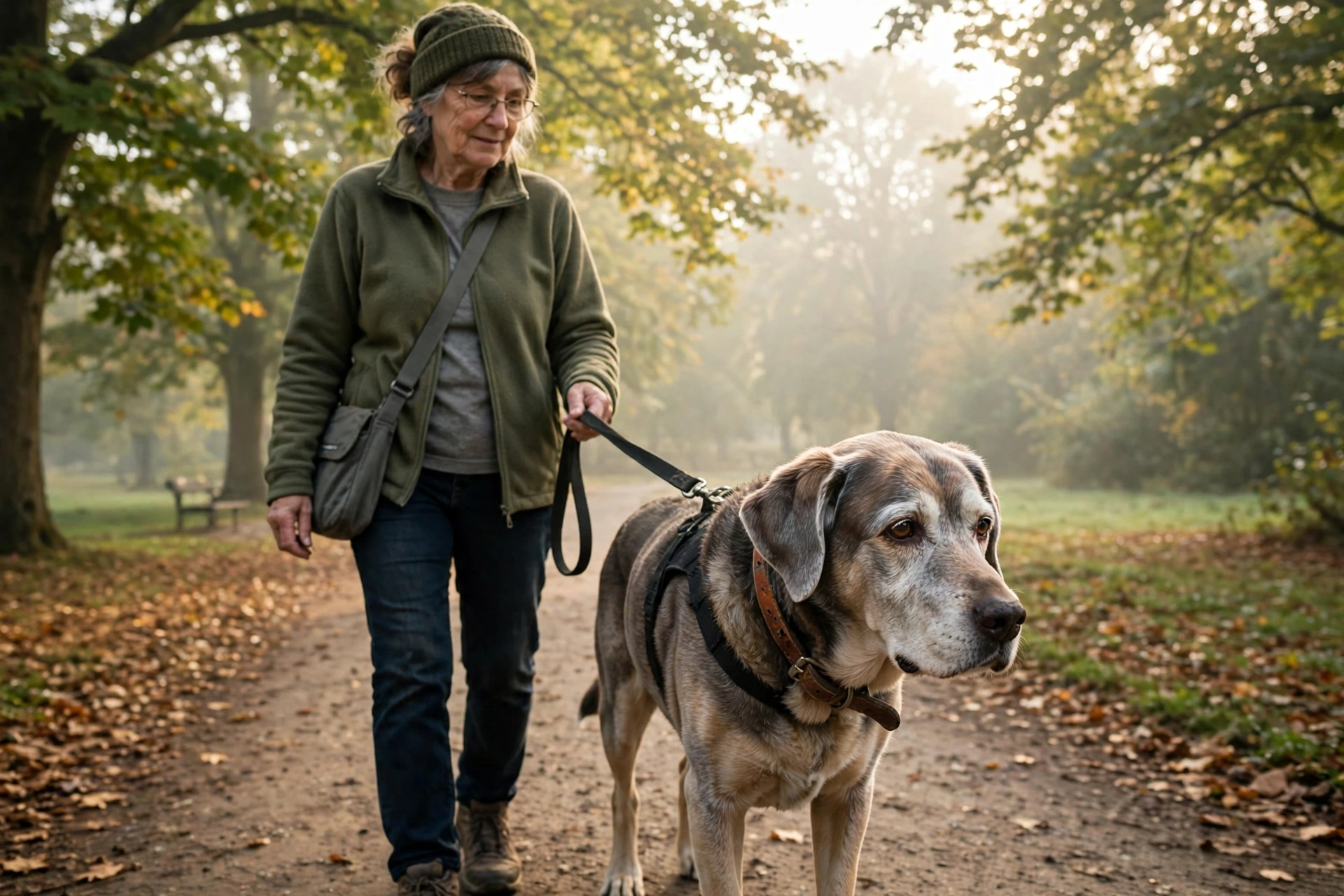
Exercise is still important for an older dog, but it needs to be gentler and shorter. Regular, gentle exercise keeps the muscles strong, keeps the joints moving, and keeps the dog’s weight under control. It also keeps the mind active, and it helps the dog to sleep well.
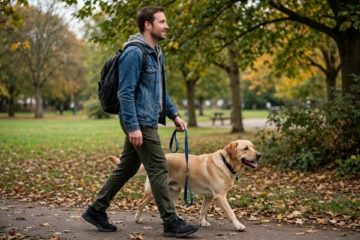
Short walks, several times a day, are better than one long walk. Walk on soft ground, such as grass, which is easier on the joints than hard pavement. Keep the pace steady, and stop before your dog gets tired. Let your dog sniff and explore, because this is mental stimulation as well as exercise.
Swimming is excellent for older dogs, because the water supports the dog’s weight, so the joints are not loaded, while the muscles still get a good workout. Only swim in safe water, and only if your dog enjoys it.
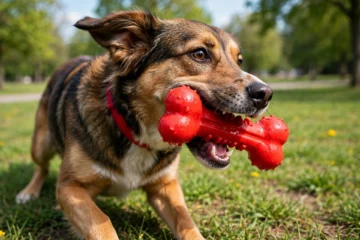
Avoid exercise that jars the joints: running on hard ground, jumping, chasing a ball at full speed, and playing roughly with younger dogs. These can cause pain and injury. Instead, use gentle games, such as slow fetch, or a food puzzle toy.
Watch your dog during and after exercise. If it limps, if it is stiff the next morning, or if it is reluctant to go out, the exercise was too much. Reduce the distance or the time, and build up slowly.
Mental exercise is just as important as physical exercise. Food puzzle toys, gentle training, and new smells on a walk all keep an older dog’s mind active, and they help to slow cognitive decline.

Donate Now
Comfort at home
An older dog needs a comfortable home. Provide a soft, thick, warm bed, away from draughts, because older dogs feel the cold more. A raised bed, or a bed with sides to lean against, can help a dog with stiff joints. If your dog sleeps on the floor, a thick orthopaedic bed makes a real difference.
Make it easy for your dog to move around. Put non slip mats on slippery floors, because an older dog can easily slip and injure itself. Use ramps instead of stairs where you can, and help your dog into the car with a ramp or by lifting it gently. Keep food and water bowls at a comfortable height, so your dog does not have to bend down too far.
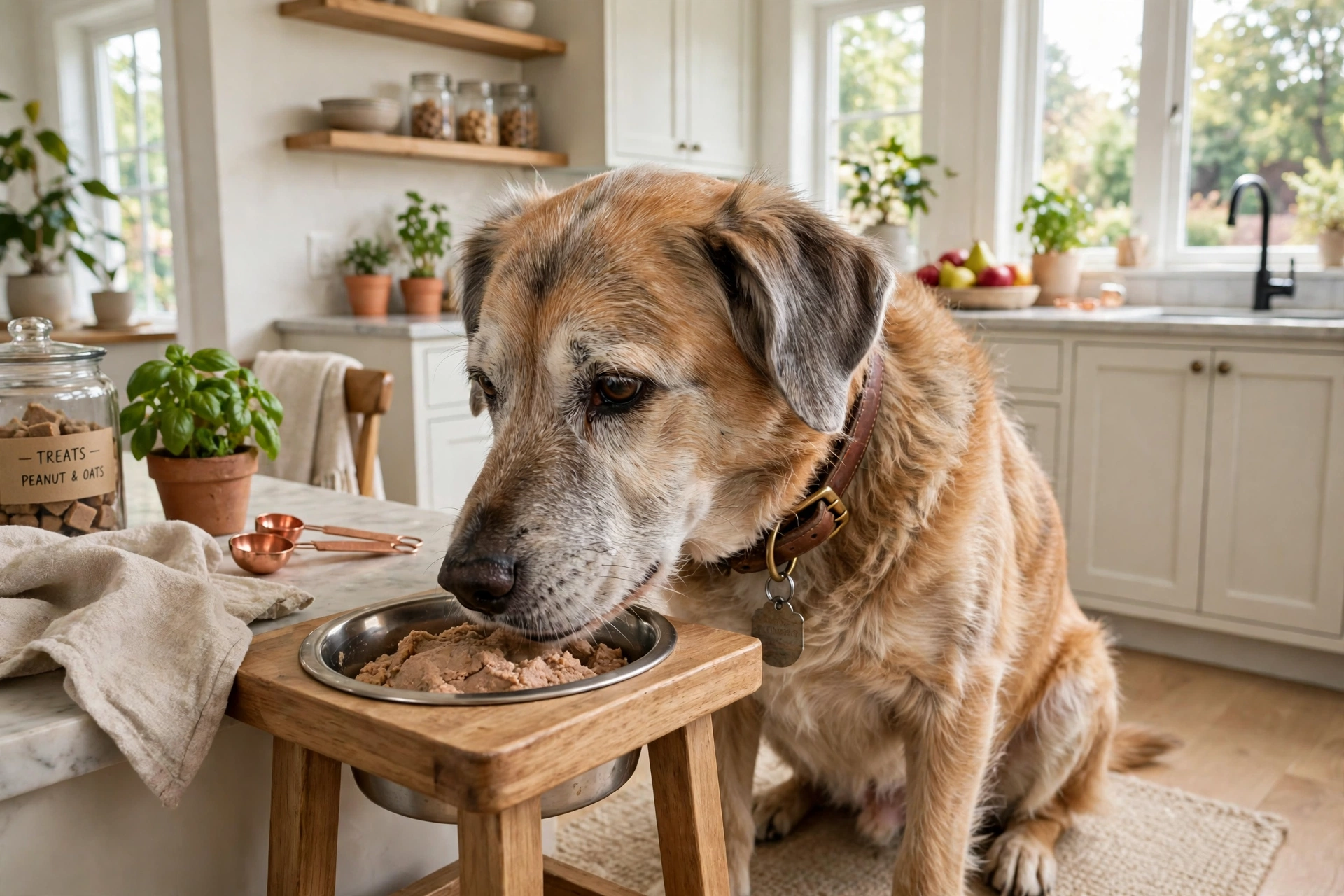
Keep your dog warm in winter, and cool in summer. Older dogs are less able to regulate their temperature, and they can become cold or overheated more easily. A coat on a cold day, and shade and water on a hot day, help a great deal.
Keep the routine the same. Older dogs, especially those with cognitive decline, do best with a regular routine: the same times for walks, meals and sleep, and the same places for their bed, food and water. Do not move the furniture around, because an older dog with poor vision may bump into things.
Health checks and common problems
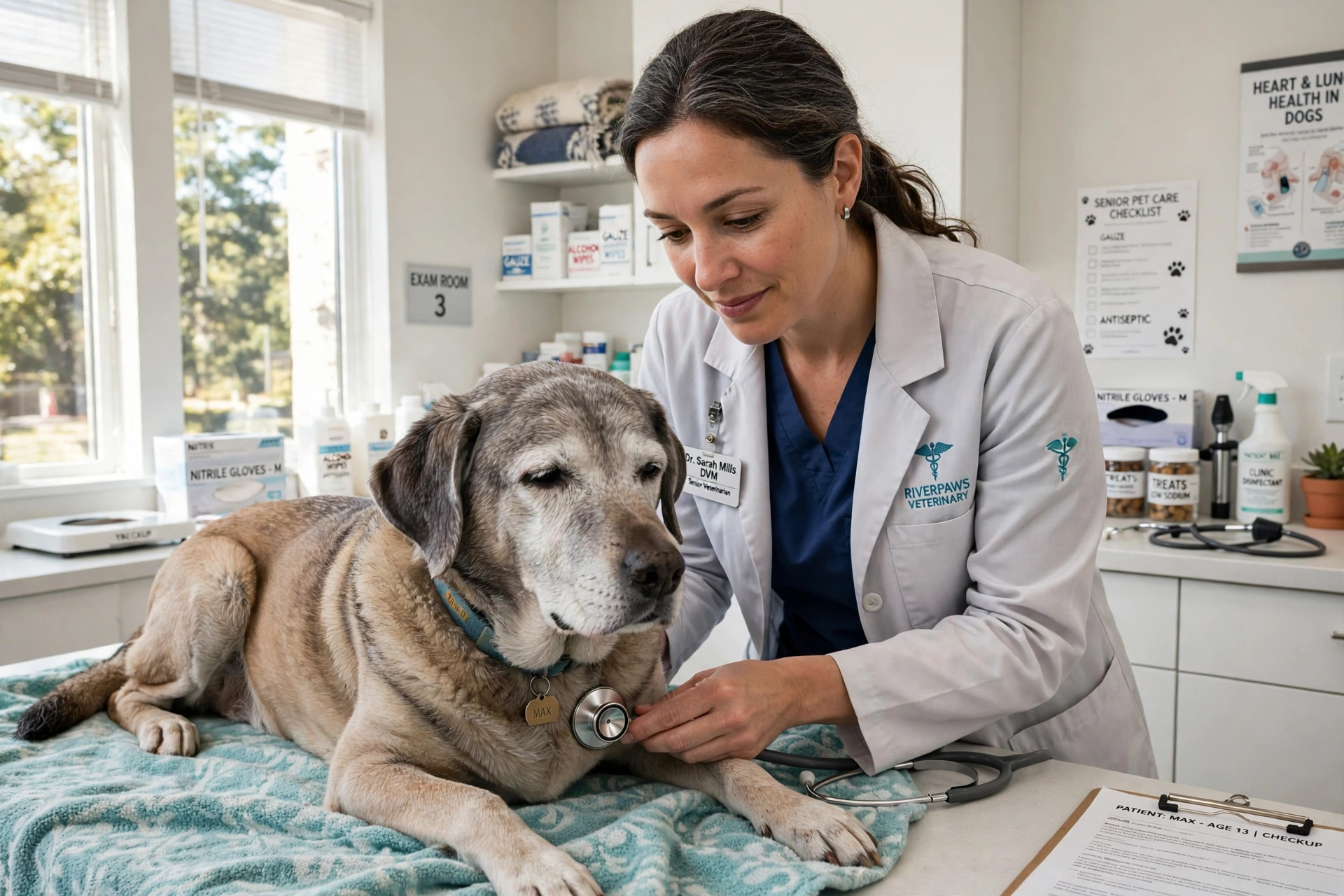
Regular vet checks are the most important part of senior dog care. An older dog should see the vet at least twice a year, even if it seems well. The vet can check the teeth, the joints, the heart, the eyes, the ears, and the weight, and can do blood tests to check the liver, kidneys and thyroid. Many problems are found early at a routine check, when they are easiest to treat.
Arthritis is the most common problem in older dogs. Signs include stiffness when getting up, hesitation before stairs or jumping, a limp after exercise, and less interest in walks or play. Arthritis cannot be cured, but it can be managed with pain relief, the right exercise, weight control, and home care. If you notice any of these signs, see your vet.
Dental disease is also very common. Signs include bad breath, red or swollen gums, tartar on the teeth, eating slowly, dropping food, or chewing on one side. Dental disease is painful, and it can affect the heart, liver and kidneys. Ask your vet to check your dog’s teeth at every visit.
Kidney disease is common in older dogs. Signs include drinking more water, going to the toilet more often, losing weight, and having a poor appetite. Blood and urine tests can find kidney disease early, and a special diet and treatment can slow it down.
Heart disease can cause coughing, especially at night, breathlessness, tiredness, and a swollen belly. If your dog coughs, or gets out of breath easily, see your vet.
Cancer is more common in older dogs. Signs include lumps that grow, wounds that do not heal, weight loss, loss of appetite, and tiredness. Not every lump is cancer, but every new lump should be checked by a vet.
Other problems to watch for include hearing loss, vision loss, incontinence, and changes in behaviour, such as confusion, anxiety, or getting lost in the house. These can be signs of cognitive decline, which is similar to dementia in people, and which can often be helped with diet, medication, and mental stimulation.
Cognitive decline: when an older dog becomes confused
Cognitive decline, sometimes called canine cognitive dysfunction, is a common problem in older dogs. It affects the brain, and it causes changes in behaviour. A dog with cognitive decline may become confused, may get stuck in corners, may stare at walls, may forget its house training, may sleep more during the day and be restless at night, and may become anxious or withdrawn.
It is important to know that cognitive decline is not just old age, and it is not something you have to accept. There are diets, supplements and medicines that can help, and mental stimulation, such as food puzzle toys and gentle training, can slow the decline. If your dog shows signs of confusion, see your vet, and ask about cognitive decline.
Keep the routine the same, keep the environment familiar, and be patient. A confused dog needs reassurance, not punishment. If it has an accident in the house, clean it up without fuss. If it gets stuck, help it gently. If it is restless at night, a night light, and a bed near you, can help.
Grooming and daily care for a senior dog
Grooming is still important for an older dog, but it needs to be gentler. Brush your dog regularly, to keep the coat healthy and to check for lumps, sores, or parasites. Be gentle, especially over sore joints, and stop if your dog flinches.
Check your dog’s nails regularly. Older dogs walk less, so their nails wear down less, and they can become long and uncomfortable. Trim them carefully, or ask your vet or a groomer to do it.
Check your dog’s ears, eyes and teeth regularly. Clean the ears gently if your vet advises it, and wipe away any discharge from the eyes. Brush your dog’s teeth if it will let you, using toothpaste made for dogs, or ask your vet about dental care.
Keep your dog clean, but do not bathe it too often, because this can dry out the skin. Use a shampoo made for dogs, and dry your dog well afterwards, because older dogs feel the cold more.
Supporting dogs who need senior care
Not every dog has an owner who can pay for senior care, veterinary treatment, or medicine. The Dog Hospital trust collects donations to pay for veterinary treatment, medicines, vaccinations and care for dogs in need. Your donation, large or small, helps a sick or injured dog get the treatment it deserves, including care for an older dog that needs pain relief, dental treatment, or a comfortable bed.
You can donate through PayPal at vehari566@gmail.com, or by scanning the QR code below to donate through the trust’s TRC20 wallet. Every donation is voluntary, and keeping your payment receipt is a good idea. To learn more about the trust and how donations are used, visit the Donate page on this site. Thank you for helping dogs get treatment.
Donate Now
Donate Now
Making the later years happy
An older dog still wants to be part of the family. Keep it involved: let it sit with you, let it come on gentle walks, let it meet people and other dogs that it likes. Do not leave it alone for long hours, because older dogs can become anxious and lonely.
Adapt the play. An older dog may not be able to chase a ball, but it may enjoy a gentle game of find the treat, or a slow walk with plenty of time to sniff. Sniffing is mental stimulation, and it is very enjoyable for a dog.
Keep training, gently. Teach your dog a new trick, or practise old ones, with plenty of treats and praise. This keeps the mind active, and it strengthens the bond between you and your dog.
Be patient. An older dog may be slower, may need more time to get up, may need to go to the toilet more often, and may have accidents. Be understanding, and do not punish it. It is doing its best.
Spend time together. The later years are precious, and the time you spend with your older dog is the most important thing you can give it. A gentle walk, a quiet evening together, a soft bed, and a kind word are what an older dog wants most.
When to say goodbye
This is the hardest part of senior dog care, and it is something every owner of an older dog must think about. As a dog gets older, and as its health declines, there comes a time when its quality of life is poor, and it is suffering, despite treatment.
Quality of life means: can your dog eat, drink, move, sleep, and enjoy life? Does it have more good days than bad days? Is it in pain that cannot be controlled? Is it frightened or confused most of the time? Your vet can help you assess this, and can talk to you honestly about what to expect.
Making the decision to say goodbye is never easy, and it is never wrong to ask for help. Talk to your vet, talk to your family, and take your time. When the time comes, your vet can help your dog pass peacefully and without pain, at the clinic or at home. It is the last kind thing you can do for a dog that has given you so much.
Common mistakes in senior dog care
The most common mistake is assuming that slowing down, stiffness, or behaviour changes are just old age, and that nothing can be done. Many of these problems are treatable, and a vet check can make a real difference to your dog’s comfort.
Another mistake is overfeeding. Older dogs need fewer calories, and extra weight makes joint pain, breathing problems and other health problems worse. Feed measured amounts, and keep treats to a small part of the diet.
A third mistake is stopping exercise altogether. Gentle, regular exercise is essential for an older dog, to keep its muscles strong, its joints moving, and its mind active. A dog that never exercises becomes stiff, weak and overweight.
A fourth mistake is missing vet checks. An older dog should see the vet at least twice a year, even if it seems well. Many problems are found early at a routine check, when they are easiest to treat.
A fifth mistake is changing the routine or the environment suddenly. Older dogs, especially those with cognitive decline or poor vision, do best with a regular routine and a familiar environment. Keep things the same, and introduce changes slowly.
Conclusion
Senior dog care is about attention, patience, and love. Feed your older dog well, in measured amounts, and give it fresh water at all times. Give it gentle, regular exercise, and mental stimulation. Keep it comfortable at home, with a soft warm bed, non slip floors, and ramps instead of stairs. Take it to the vet at least twice a year, and watch for the signs of arthritis, dental disease, kidney disease, heart disease, and cognitive decline. Be patient with its slower pace, its confusion, and its accidents. Keep it part of the family, and spend time together. An older dog has given you years of loyalty, and in its later years, your care and your love are the greatest gifts you can give it.
Donate Now
Donate Now
Frequently asked questions
When is a dog considered senior?
It depends on size. Small breeds are senior at around ten years, medium breeds at around eight or nine years, and large or giant breeds at around six or seven years, because large dogs age faster. Your vet can tell you when your dog is senior.
How much exercise does a senior dog need?
Short, gentle walks several times a day, on soft ground, are best. Avoid running, jumping and rough play. Swimming is excellent if your dog enjoys it. Stop before your dog gets tired, and watch for limping or stiffness the next day.
What should I feed my senior dog?
A good quality senior dog food, fed in measured amounts, is usually best. Older dogs need fewer calories but still need good protein. Ask your vet which food is right, and change food gradually over a week.
How often should a senior dog see the vet?
At least twice a year, even if it seems well. Regular checks find problems early, when they are easiest to treat. Blood tests can check the liver, kidneys and thyroid.
What are the signs of cognitive decline in dogs?
Confusion, getting stuck in corners, staring at walls, forgetting house training, sleeping more during the day and being restless at night, and becoming anxious or withdrawn. See your vet if you notice these signs, as diet, medication and mental stimulation can help.
Is slowing down just old age?
No, slowing down is often pain, dental disease, or another treatable problem, not just old age. An older dog that slows down deserves a vet check, because many of these problems can be helped.
0 Comments