A good toy is more than a way to keep your dog busy. It keeps your dog’s mind active, it helps with training, it relieves boredom and stress, and it strengthens the bond between you and your dog. A bad toy can break a tooth, block the gut, or frighten your dog.
This guide explains how to choose safe toys for your dog: what to look for, which types of toys suit which dogs, and which toys to avoid.
Why toys matter
Dogs need mental stimulation as much as they need exercise. A dog that is bored will find its own entertainment, and that usually means chewing your shoes, digging up the garden, or barking at everything. A toy gives a bored dog something to do, and it gives a clever dog a problem to solve.
Toys also help with training. A tug toy can be a reward for coming when called. A fetch toy can be a reward for a good recall. A puzzle toy can teach a dog to be patient and to think. Play with toys is also a way to bond: a game of tug or fetch is time together, and it builds trust between you and your dog.
For puppies, toys are essential. Puppies explore the world with their mouths, and they need safe things to chew. A puppy that has good chew toys is far less likely to chew your furniture, your shoes, or your hands.
Safety first: the rules of choosing toys
The first rule is size. A toy must be too large for your dog to swallow, and too large to fit entirely in its mouth. A toy that is the right size for a small dog can be a choking hazard for a large dog. When in doubt, choose the larger size.
The second rule is material. A toy must be made of a material that is safe to chew, and it must not break into small pieces that can be swallowed. Avoid toys with small parts that can come off, such as buttons, eyes, or squeakers that can be pulled out. Avoid toys with strings, ribbons, or stuffing that can be eaten and block the gut.
The third rule is hardness. A toy that is harder than your dog’s tooth can break the tooth. A simple test is the thumbnail test: press your thumbnail into the toy. If it does not give at all, it is probably too hard for your dog’s teeth. Avoid very hard nylon bones, antlers, and hard plastic toys that do not give.
The fourth rule is supervision. No toy is completely safe, and no toy should be left with a dog unsupervised until you know how the dog plays with it. Check toys regularly for damage, and throw away any toy that is broken, torn, or missing pieces.
The fifth rule is age and strength. A toy that is safe for a gentle adult dog may not be safe for a strong chewer, and a toy that is safe for an adult may not be safe for a puppy with sharp baby teeth. Choose toys for the dog you have, not for the dog you wish you had.

Donate Now
Chew toys
Chew toys are the most popular type of dog toy, and they serve a real purpose: chewing relieves stress, cleans the teeth, and keeps a dog busy. Good chew toys are made of rubber, and they give a little when the dog bites them. The best known are the hollow rubber toys that can be stuffed with food, which keep a dog busy for a long time.
Choose a chew toy that is the right size and strength for your dog. Most brands make toys in different sizes and strengths, from puppy to heavy chewer. A heavy chewer needs a toy made for heavy chewers, not a standard toy that it will destroy in minutes.
Avoid rawhide chews. Rawhide is a by product of the leather industry, and it can swell in the stomach, cause blockages, and contain chemicals from processing. If your dog likes to chew, choose a rubber toy or a natural chew that is safe to digest, and supervise the chewing.
Avoid cooked bones, and be careful with raw bones. A bone that is too hard can break a tooth, and a bone that splinters can damage the gut. If you give your dog a bone, choose one that is appropriate for its size, supervise it, and take it away when it becomes small enough to swallow.
Puzzle and enrichment toys
Puzzle toys are toys that make your dog think. They hide food inside, and the dog has to work out how to get it out: by rolling the toy, by lifting a lid, by sliding a panel, or by pressing a button. Puzzle toys are excellent for clever dogs, for dogs that eat too fast, and for dogs that are left alone during the day.
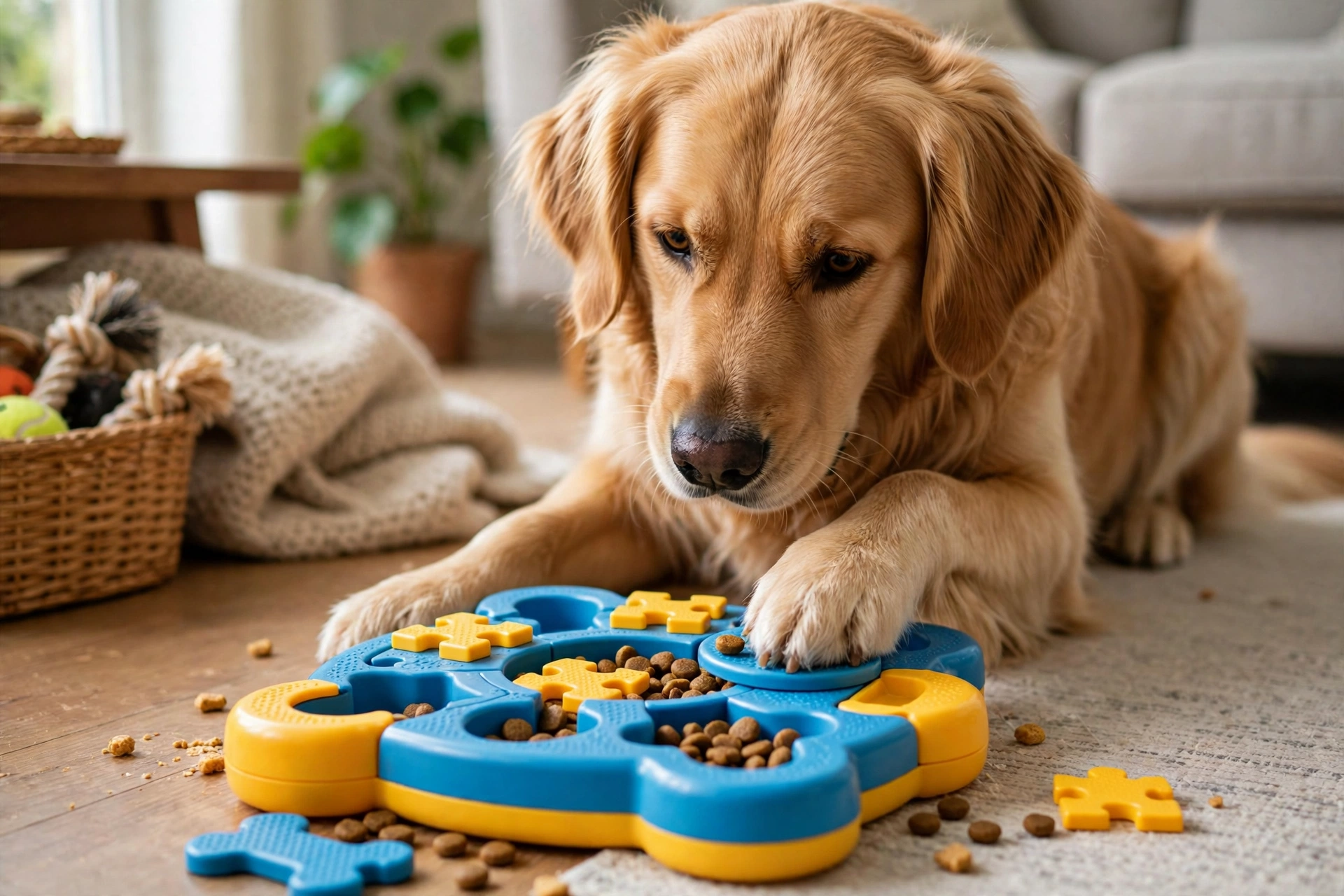
Start with an easy puzzle, and let your dog succeed. If the puzzle is too hard, the dog will get frustrated and give up. Gradually increase the difficulty as the dog learns. Rotate the puzzle toys, so that the dog does not get bored with the same one.
Snuffle mats are a simple form of enrichment: a mat made of fabric strips, with food hidden in it. The dog has to sniff and search for the food, which is a natural behaviour for dogs, and it tires them out mentally. A snuffle mat is a good choice for a dog that needs calming down, or for a dog recovering from an injury that cannot exercise.
Lick mats are flat mats with a textured surface, spread with wet food or yoghurt. Licking is calming for dogs, and a lick mat can help a nervous dog relax, or keep a dog busy during grooming or vet visits. Use a lick mat in moderation, and choose a spread that is safe for your dog.
Fetch and tug toys
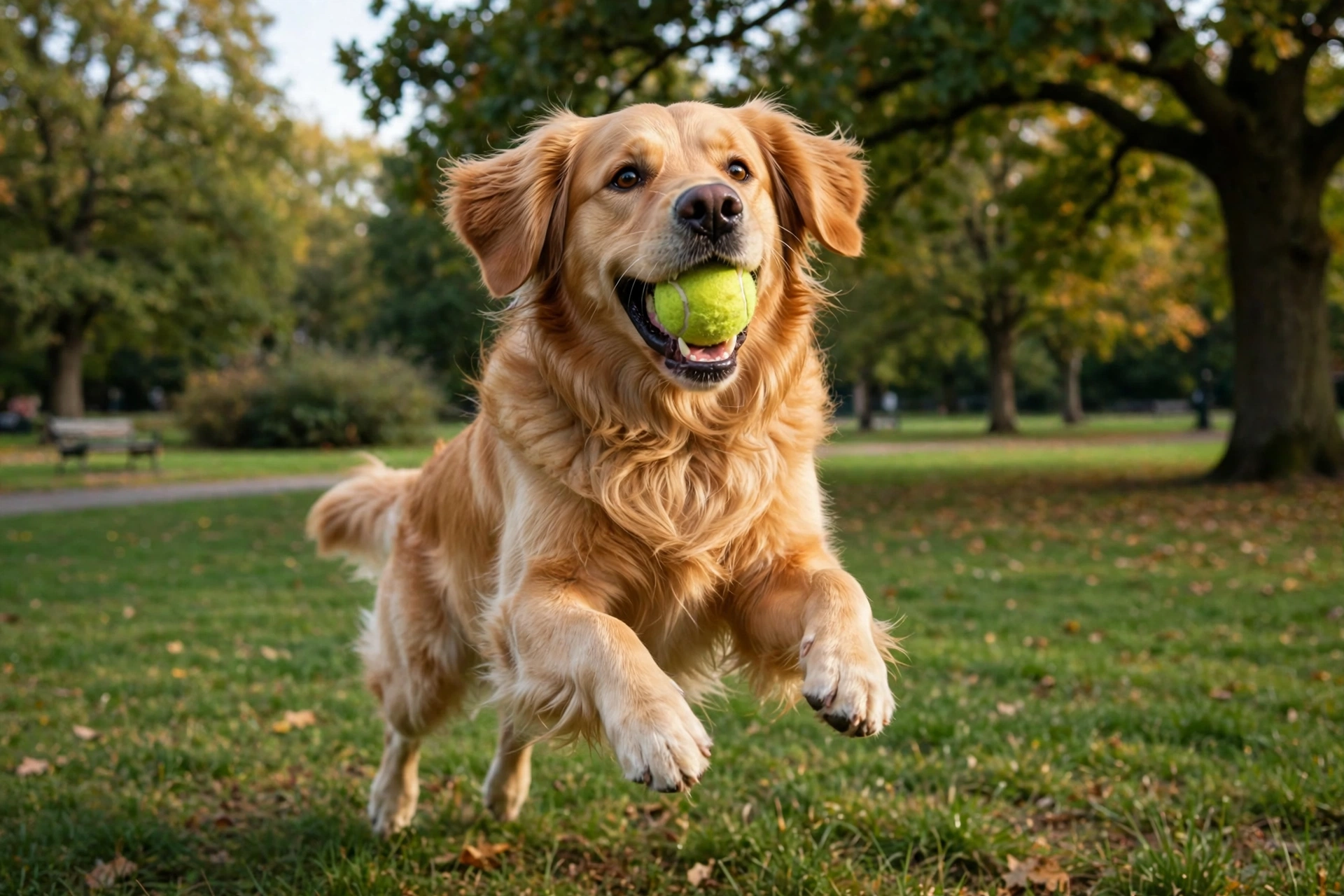
Fetch toys are balls, frisbees, and throwing toys. A ball is the classic fetch toy, but it must be the right size: too small, and it can be swallowed or get stuck in the throat; too large, and the dog cannot carry it. Tennis balls are popular, but the felt on a tennis ball is abrasive and wears down the teeth. If your dog plays fetch often, choose a ball made for dogs, with a smooth rubber surface.
Never throw a stick for your dog. Sticks can splinter, and a dog running to catch a stick can be badly injured if the stick hits the ground and pierces the mouth or throat. Use a throwing toy made for dogs instead.
Tug toys are ropes, rings, and handles that you and your dog pull together. Tug is an excellent game, and it does not make a dog aggressive, despite what some people say. The rules are simple: the game starts and stops when you say so, the dog must drop the toy when you ask, and teeth on skin end the game at once. A dog that learns to play tug with rules learns self control, and it is a great way to bond.
Toys for puppies
Puppies need toys that are soft enough for their baby teeth, but tough enough not to be destroyed in minutes. Soft rubber toys, rope toys, and plush toys made for puppies are good choices. A puppy should have several toys to choose from, and they should be rotated, so that the puppy does not get bored.
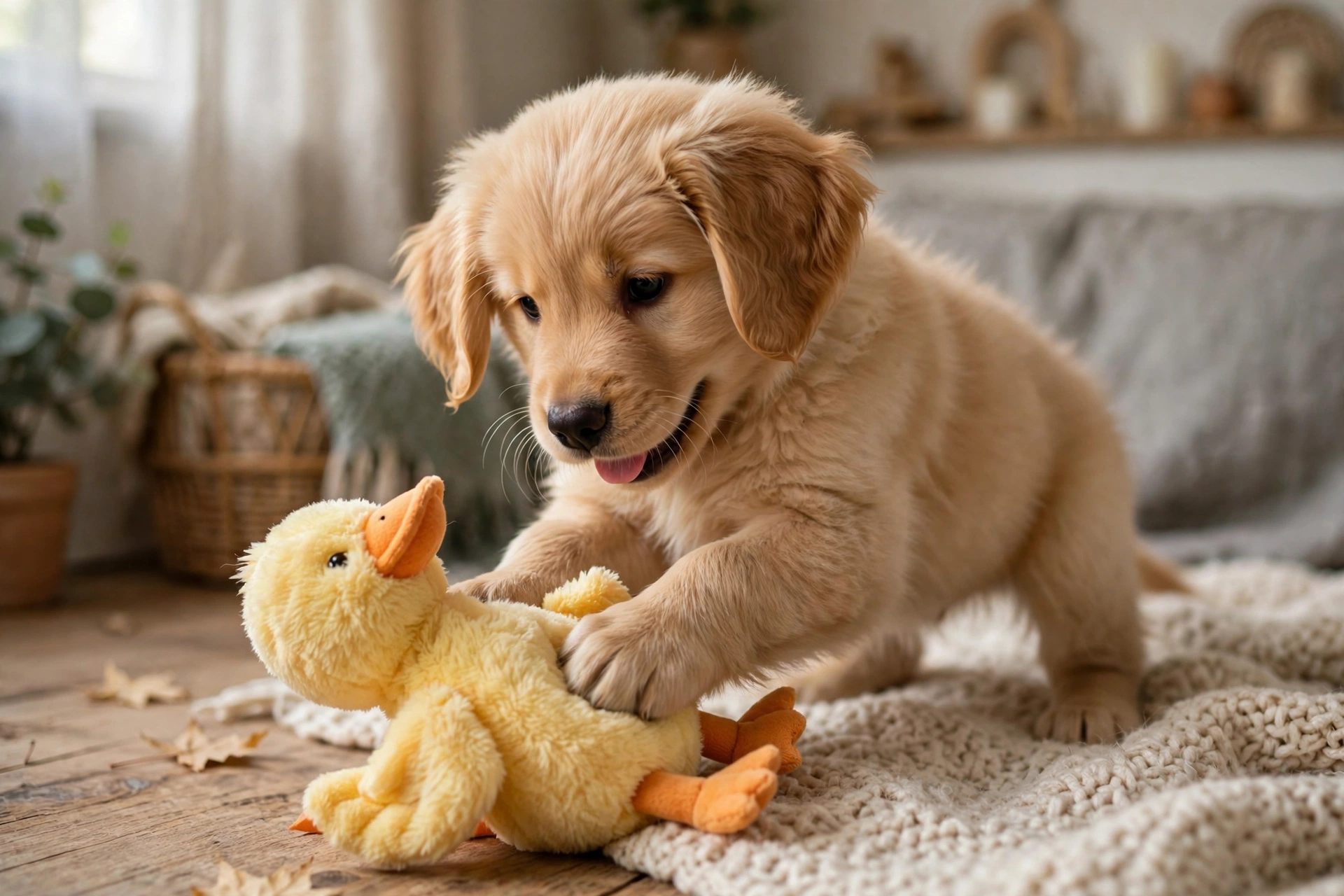
A puppy that is teething will chew more, and it needs something safe to chew. A rubber toy that can be chilled in the fridge can soothe sore gums. Frozen carrots are a safe, cheap chew for a teething puppy, but supervise the puppy and take the carrot away when it becomes small.
Avoid toys with squeakers for very young puppies, unless you supervise closely. A puppy that learns to pull the squeaker out may swallow it. Choose toys without small parts, and check them often for damage.
Toys for strong chewers and large dogs
Strong chewers, such as Pit Bulls, Staffies, Rottweilers and German Shepherds, destroy most toys in minutes. They need toys made specifically for heavy chewers, usually made of very tough rubber. Even these toys are not indestructible, and they should be checked regularly and replaced when damaged.
Large dogs need large toys. A ball that is the right size for a Labrador can be a choking hazard for a Great Dane. Always check the size guide on the toy, and choose a size larger than you think you need.
For strong chewers, a stuffed rubber toy is often the best choice. It can be filled with food, it bounces unpredictably, and it is tough enough to last. Avoid plush toys for strong chewers, because they will be torn open in minutes, and the stuffing can block the gut if it is eaten.
Donate Now
Toys to avoid
Some toys are not safe for any dog. Avoid toys with small parts that can be pulled off and swallowed. Avoid toys with strings, ribbons, or elastic, which can cause a blockage if eaten. Avoid toys made of thin plastic that shatters into sharp pieces. Avoid children’s toys, which are not made to withstand a dog’s chewing, and which often contain small parts.
Avoid cooked bones of any kind, because they splinter. Avoid very hard objects, such as antlers, hard nylon bones, and real bones that are too hard, because they break teeth. Avoid tennis balls for dogs that chew them, because the felt wears the teeth and the ball can be compressed and get stuck in the throat.
Avoid laser pointers as toys. Chasing a light can become an obsessive behaviour, and a dog that chases lights may start chasing shadows, reflections, and anything that moves. It is frustrating for the dog, because it can never catch the light. Use a physical toy instead.
How many toys does a dog need
A dog does not need dozens of toys. It needs a few good toys, rotated regularly, so that they stay interesting. Keep most of the toys in a box, and give your dog two or three at a time. Change them every few days, so that an old toy feels new again.
Watch which toys your dog likes, and which it ignores. Every dog is different: some love balls, some love tug, some love puzzle toys, and some love to carry a soft toy around. Let your dog’s preferences guide you, and do not buy a toy just because it is popular.
Clean the toys regularly. Rubber toys can be washed with warm water and soap. Plush toys can be washed in the washing machine, if the label allows it. A dirty toy can carry bacteria, and a dog that chews a dirty toy can get sick.
Supporting dogs who need care
Not every dog has an owner who can buy toys, pay for veterinary treatment, or provide care. The Dog Hospital trust collects donations to pay for veterinary treatment, medicines, vaccinations and care for dogs in need. Your donation, large or small, helps a sick or injured dog get the treatment it deserves, and helps more dogs live healthy, happy lives.
You can donate through PayPal at vehari566@gmail.com, or by scanning the QR code below to donate through the trust’s TRC20 wallet. Every donation is voluntary, and keeping your payment receipt is a good idea. To learn more about the trust and how donations are used, visit the Donate page on this site. Thank you for helping dogs get treatment.
Donate Now
Teaching your dog to play safely
Teach your dog the rules of play. Teach it to drop a toy on request, by offering a treat in exchange for the toy, and by praising the drop. Teach it that teeth on skin end the game, by stopping play at once if the dog’s teeth touch your hand. Teach it to wait before fetching, so that it does not snatch the toy from your hand.
Play with your dog every day, even if only for ten minutes. Play is exercise, it is training, and it is bonding, all in one. A dog that plays every day is a happier dog, and a happier dog is easier to live with.
If your dog guards its toys, if it growls or snaps when you try to take a toy away, do not punish it. Resource guarding is a common problem, and it is usually based on fear of losing something valuable. Teach your dog that giving up a toy leads to something better, by trading the toy for a treat, and by returning the toy afterwards. If the guarding is severe, ask a professional trainer for help.
Conclusion
Choosing the right toys for your dog is simple when you follow the rules: the right size, safe materials, not too hard, no small parts, and always supervised until you know how your dog plays. Give your dog a few good toys, rotate them, clean them, and play together every day. A dog with good toys is a dog with a busy mind, a healthy body, and a strong bond with its owner.
Donate Now
Donate Now
Frequently asked questions
What is the safest toy for a dog?
A rubber toy of the right size, made for your dog’s strength, with no small parts. It should give a little when the dog bites it, and it should be too large to swallow.
Are tennis balls safe for dogs?
Tennis balls are popular, but the felt is abrasive and wears down the teeth, and a ball can be compressed and get stuck in the throat. Choose a ball made for dogs, with a smooth rubber surface.
Can I give my dog a bone?
Cooked bones are never safe, because they splinter. Raw bones carry risks too: they can break teeth and cause stomach problems. If you give a bone, choose one appropriate for your dog’s size, supervise it, and take it away when it becomes small.
Are puzzle toys good for dogs?
Yes. Puzzle toys make your dog think, they slow down fast eaters, and they keep a dog busy when it is alone. Start with an easy puzzle and increase the difficulty as the dog learns.
How many toys does my dog need?
A few good toys, rotated regularly, are better than dozens of toys left out all the time. Give your dog two or three toys at a time, and change them every few days.
Should I leave toys with my dog when I go out?
Only leave toys that you know are safe for your dog unsupervised, such as a stuffed rubber toy. Do not leave a dog unsupervised with a new toy, a damaged toy, or a toy with small parts.


0 Comments