Introduction
Walking your dog is one of the most important things you do together. It is exercise, it is mental stimulation, it is training, and it is bonding, all in one. A dog that is walked well is calmer, healthier, and happier than a dog that is rarely walked. A dog that pulls on the lead, lunges at other dogs, or refuses to walk makes every walk a struggle.
This guide explains how to walk your dog well: how to teach loose lead walking, how long and how often to walk, what equipment to use, and how to make walks safe and enjoyable.
Why walks matter
Dogs need exercise every day. The amount depends on the breed, the age, and the health of the dog. A Border Collie or a Labrador needs far more exercise than a Pug or a Bulldog. A puppy needs short, gentle walks, because its joints are still growing. An older dog needs regular, gentle exercise, but not too much at once.
Walking is not just physical exercise. It is mental exercise too. A walk is full of smells, sights, and sounds, and sniffing is one of the most important activities for a dog. A dog that is allowed to sniff on a walk is a dog that comes home tired and satisfied. A dog that is rushed through a walk, without time to sniff, comes home frustrated.
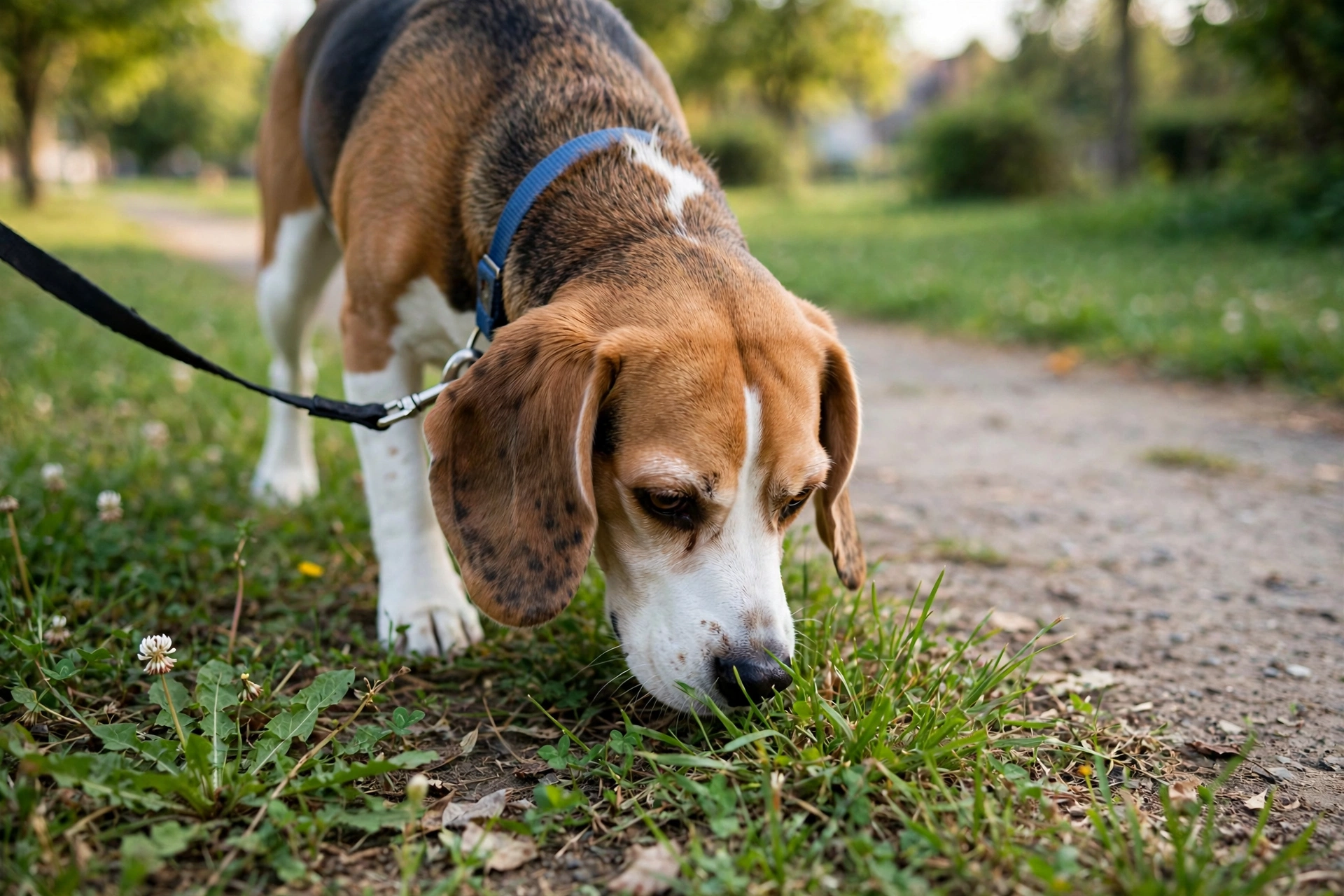
Walking is also training. Every walk is a chance to practise recall, to practise walking on a loose lead, to practise meeting people and dogs calmly, and to practise listening to you in a distracting environment. A dog that behaves well on walks is a dog that has been trained on walks.
How much should you walk your dog
Most adult dogs need at least one hour of exercise a day, split into two walks. High energy breeds, such as Border Collies, Huskies, and Spaniels, may need two hours or more. Low energy breeds, such as Pugs, Bulldogs, and Basset Hounds, may need only thirty to forty five minutes a day.
Puppies need less. A common guide is five minutes of exercise per month of age, twice a day. A three month old puppy needs about fifteen minutes, twice a day. A six month old puppy needs about thirty minutes, twice a day. Too much exercise can damage a puppy’s growing joints, so keep puppy walks short and gentle, and avoid stairs, jumping, and long runs until the puppy is fully grown.
Older dogs need regular exercise, but they may need shorter, gentler walks, and more rest. If your older dog is stiff, slow, or reluctant to walk, see your vet: it may have arthritis, and there are treatments that can help.
Watch your dog for signs of tiredness: heavy panting, lagging behind, lying down, or refusing to go on. If your dog is tired, go home. Over exercising a dog, especially in hot weather, is dangerous. Dogs can suffer from heatstroke, and it can be fatal.
Choosing the right equipment
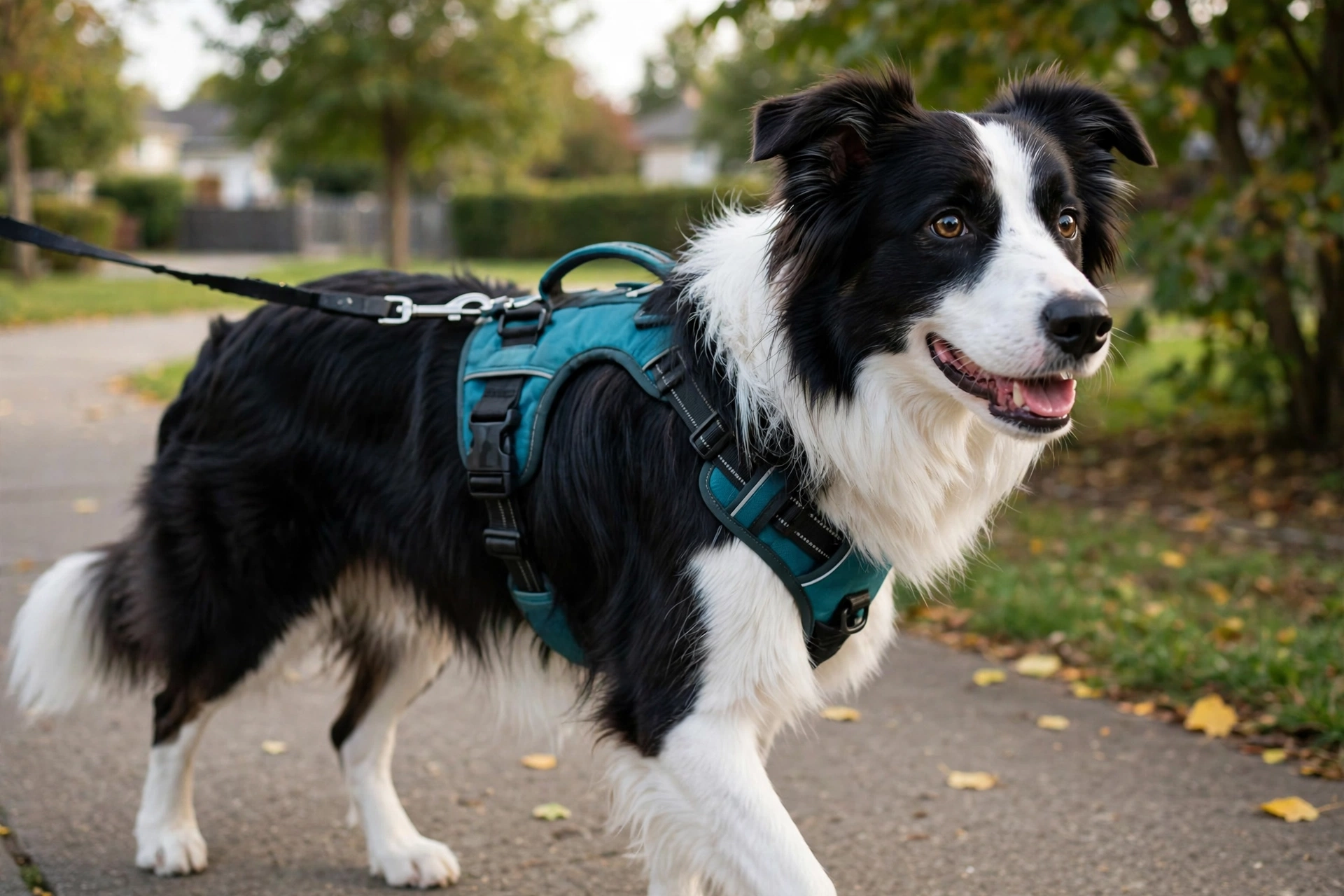
A good lead and a good collar or harness make walking easier. For most dogs, a harness is better than a collar, because it spreads the pressure across the chest, not the neck. A dog that pulls on a collar can damage its throat, its windpipe, and its neck. A harness is safer, and it gives you more control.
Choose a harness that fits well. It should be snug, but not tight, and it should not rub under the legs or across the chest. A poorly fitting harness can chafe and cause sores. Ask the pet shop to help you fit it, or ask your vet or trainer.
Use a standard lead, about one and a half to two metres long. A retractable lead gives the dog too much freedom, and it teaches the dog to pull, because the dog learns that pulling makes the lead longer. A retractable lead is also dangerous: it can tangle around legs, it can snap, and it gives you little control if your dog lunges at something.
A head collar, such as a Halti or a Gentle Leader, can help with a dog that pulls very strongly, because it gives you control over the head. It is not a muzzle, and it does not hurt the dog, but it takes time for the dog to get used to it. Introduce it slowly, with treats, and never jerk the lead when the dog is wearing a head collar.
Always carry poo bags, and always pick up after your dog. It is the law in most places, and it is simple courtesy. Carry water for your dog on long walks, especially in hot weather, and carry a few treats for training.

Donate Now
Teaching loose lead walking
Loose lead walking means that your dog walks beside you, on a loose lead, without pulling. It is the most important walking skill, and it is the one that most owners struggle with. The good news is that any dog can learn it, with patience and consistency.
Start in a quiet place, with few distractions, such as your garden or a quiet street. Hold the lead loosely, and start walking. The moment your dog pulls ahead and the lead goes tight, stop. Stand still, and wait. Do not pull back, and do not drag the dog. Wait until the dog turns back towards you, or the lead goes slack, then praise the dog and walk on. Repeat this every time the lead goes tight. It is slow at first, and you may only walk a few metres in ten minutes, but the dog learns quickly that pulling stops the walk, and a loose lead keeps the walk going.
Another method is to change direction. The moment your dog pulls ahead, turn around and walk the other way. The dog learns to pay attention to you, because it does not know where you are going next. Praise the dog when it walks beside you, and give it a treat every few steps at first, then less often as it learns.
Keep training sessions short, five to ten minutes, and end while the dog is still doing well. Practise every day, and be consistent: if you let the dog pull sometimes, it will pull always. Everyone who walks the dog must use the same rules, or the dog will be confused.
Never use punishment to teach loose lead walking. Jerking the lead, shouting, or using a choke chain can injure the dog, and it damages the trust between you and your dog. Reward the behaviour you want, and the dog will offer it more often.
Dealing with pulling, lunging and barking
If your dog pulls towards other dogs, people, or smells, it is usually because it is excited, not because it is being naughty. Teach the dog that calm behaviour gets what it wants, and pulling does not. If the dog pulls towards another dog, stop and wait until it is calm, then walk on. If it cannot calm down, increase the distance, and try again from further away.
If your dog lunges and barks at other dogs, it may be fearful or frustrated. Do not punish the lunging: it is a sign that the dog is over its threshold, which means it is too close to the thing it is afraid of. Increase the distance, reward calm behaviour, and work with a trainer if the problem is severe. A reactive dog needs a training plan, not punishment.
If your dog is afraid of traffic, loud noises, or new places, start at a distance, and reward calm behaviour. Gradually get closer over days and weeks. Never force a frightened dog into a situation it cannot cope with.
Making walks fun
A walk should be enjoyable for you and for your dog. Let your dog sniff. Sniffing is how a dog reads the world, and a dog that is allowed to sniff is a dog that comes home mentally tired. A walk where the dog sniffs for ten minutes is often more tiring than a walk where the dog runs for ten minutes.
Vary the route. Dogs get bored with the same route every day, just as people do. Try a new street, a new park, or a new path. Let your dog explore, within safe limits.
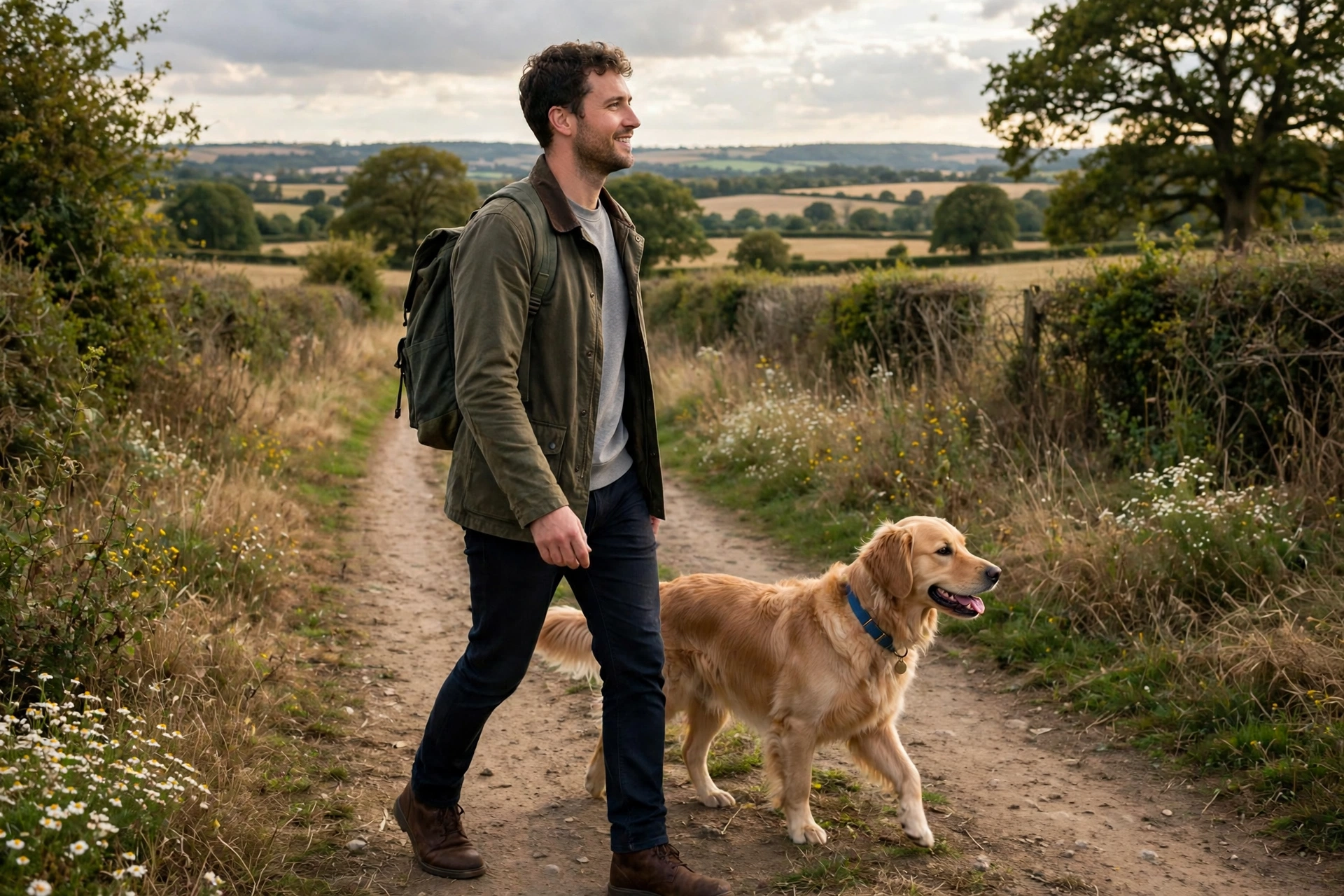
Play games on walks. Practise recall by calling your dog and rewarding it with a treat. Practise sit and stay at a quiet spot. Hide a treat in the grass and let your dog find it. These games make the walk more interesting, and they strengthen your dog’s training.
Let your dog meet other dogs and people, when it is safe and appropriate. Social interaction is part of a good walk, but it should be controlled: short, calm greetings, on a loose lead, with dogs and people that are friendly. Not every walk needs to include meeting other dogs, and not every dog enjoys it.
Safety on walks
Keep your dog safe on walks. In hot weather, walk early in the morning or late in the evening, when it is cooler. Avoid walking on hot pavements, which can burn your dog’s paws: if the pavement is too hot for your hand, it is too hot for your dog’s paws. Carry water, and watch for signs of heatstroke: heavy panting, drooling, vomiting, or collapse. If you see these signs, move the dog to shade, cool it with water, and see a vet urgently.
In cold weather, short coated dogs may need a coat, and all dogs need to be dried off after a walk in the rain. Check your dog’s paws after a walk in winter, because salt and grit on the roads can irritate them.
Keep your dog on a lead near roads, and in places where it is required by law. Even a well trained dog can be startled by a loud noise and run into the road. A lead is not a punishment: it is a safety measure.
Be aware of your surroundings. Avoid areas with broken glass, sharp objects, or poisonous plants. Do not let your dog eat things it finds on the ground, because they may be poisonous. If your dog picks up something dangerous, teach it to drop it on request, and carry treats to trade for it.
Donate Now
Walking in different seasons
In summer, walk early or late, carry water, and watch for heatstroke. In winter, keep walks shorter if it is very cold, and dry your dog off afterwards. In autumn, be careful of conkers, acorns, and mushrooms, which are poisonous to dogs. In spring, watch for pollen, which can trigger allergies, and for adders in the countryside, which can bite a curious dog.
After a walk in the countryside, check your dog for ticks, especially in spring and summer. Ticks can carry disease, and they should be removed promptly with a tick remover. Check the ears, the armpits, the groin, and between the toes, where ticks like to hide.
Supporting dogs who need care
Not every dog has an owner who can buy a lead, pay for veterinary treatment, or provide daily walks and care. The Dog Hospital trust collects donations to pay for veterinary treatment, medicines, vaccinations and care for dogs in need. Your donation, large or small, helps a sick or injured dog get the treatment it deserves, and helps more dogs live healthy, happy lives.
You can donate through PayPal at vehari566@gmail.com, or by scanning the QR code below to donate through the trust’s TRC20 wallet. Every donation is voluntary, and keeping your payment receipt is a good idea. To learn more about the trust and how donations are used, visit the Donate page on this site. Thank you for helping dogs get treatment.
Donate Now
Common mistakes in dog walking
The most common mistake is not walking the dog enough. A dog that is not walked enough becomes bored, restless, and destructive. It may bark, chew, dig, or gain weight. Every dog needs a daily walk, even on rainy days, even when you are busy.
Another mistake is letting the dog pull. A dog that is allowed to pull will pull always, and it will pull harder as it gets stronger. Teach loose lead walking from the start, and be consistent.
A third mistake is using a retractable lead. It teaches the dog to pull, it gives you little control, and it can be dangerous. Use a standard lead, and keep it loose.
A fourth mistake is rushing the walk. A walk is not just exercise: it is the dog’s chance to sniff, to explore, and to be a dog. Let it sniff, let it explore, and enjoy the walk together.
Conclusion
Walking your dog well is one of the best things you can do for it. Give it enough exercise, teach it to walk on a loose lead, use the right equipment, let it sniff, and keep it safe. A dog that is walked well is calmer, healthier, and happier, and the walk is a pleasure for you too. Put on the lead, step outside, and enjoy the walk together.
Donate Now
Donate Now
Frequently asked questions
How long should I walk my dog each day?
Most adult dogs need at least one hour a day, split into two walks. High energy breeds may need two hours or more. Puppies need five minutes per month of age, twice a day.
How do I stop my dog pulling on the lead?
Stop walking the moment the lead goes tight, and wait until it goes slack, then walk on. Repeat this every time. Alternatively, change direction when the dog pulls. Reward the dog for walking beside you, and be consistent.
Is a harness better than a collar?
For most dogs, yes. A harness spreads the pressure across the chest, not the neck, and it is safer for a dog that pulls. Choose a harness that fits well and does not rub.
Should I use a retractable lead?
No. A retractable lead teaches the dog to pull, gives you little control, and can be dangerous. Use a standard lead, about one and a half to two metres long.
Can I walk my dog in hot weather?
Walk early in the morning or late in the evening, carry water, and avoid hot pavements. Watch for signs of heatstroke: heavy panting, drooling, vomiting, or collapse. If you see these signs, cool the dog and see a vet urgently.
Why does my dog need to sniff on walks?
Sniffing is how a dog reads the world. It is mental exercise, and a dog that is allowed to sniff comes home tired and satisfied. A walk without sniffing is frustrating for a dog.
0 Comments