Introduction
Dog barking is normal. Dogs bark to warn, to greet, to ask for attention, to play, and to say they are frightened or excited. A dog that never barks would be unusual, and barking is one of the ways dogs communicate. But when barking becomes excessive, when a dog barks at everything, all day, or through the night, it becomes a problem for the owner, for the neighbours, and for the dog itself.
Excessive barking is one of the most common reasons owners seek help from a trainer, and one of the most common reasons neighbours complain. The good news is that it can usually be reduced a great deal, and often stopped, once you understand why your dog is barking, and you train it in the right way.
This guide explains why dogs bark too much, how to find the cause, and how to train your dog to be quiet, using methods that work and that do not harm your dog.
Why dogs bark
Barking is communication, and dogs bark for many reasons. Understanding the reason is the first step, because the training is different for each cause.
Alarm barking is the most common: the dog barks at something it sees or hears, such as a person passing the house, a car, a cat, or a knock at the door. The dog is warning you, and it is also warning the intruder to stay away. This is natural, but it becomes a problem when the dog barks at everything, and will not stop.
Attention barking is when the dog barks to get something: food, a toy, a walk, or your attention. The dog has learned that barking works, because in the past, barking got it what it wanted. If you give in and give the dog what it wants when it barks, you teach it to bark more.
Boredom barking is when a dog that is left alone, or that has nothing to do, barks to entertain itself. This is common in dogs that are left alone for long hours, or that get too little exercise and play. The barking is often repetitive and monotonous.
Fear barking is when a dog barks because it is frightened, for example at a stranger, at a loud noise, or at another dog. The barking is often high pitched, and the dog’s body is tense, with its ears back and its tail tucked.
Play barking is short, happy barking during play, often with a play bow and a wagging tail. This is normal, and it is not usually a problem, unless it goes on for a long time.
Separation barking is when a dog barks because it is distressed at being left alone. This is part of separation anxiety, and it needs a different approach, with desensitisation training and sometimes veterinary help.
Finding the cause of your dog’s barking
Before you start training, spend a few days watching your dog and working out why it barks. Keep a simple diary: write down when your dog barks, what was happening at the time, how long it barked for, and what you did. After a few days, a pattern will emerge.
Ask yourself: does your dog bark at people passing the house, at the doorbell, at other dogs, at noises, or at nothing you can see? Does it bark when you leave, or when it wants something, or when it is bored? Does it bark more at certain times of day, or in certain places?
A camera, or a phone recording, can help, especially if your dog barks when you are out. Watch what happens in the first few minutes after you leave, and what your dog does for the rest of the time.
Once you know the cause, you can choose the right training. A dog that barks at the door needs different training from a dog that barks for attention, and a dog that barks from fear needs a different approach again.
The golden rule: never reward barking
The most important rule in stopping excessive barking is this: never reward barking. If your dog barks for attention, and you give it attention, you have rewarded the barking. If your dog barks for food, and you give it food, you have rewarded the barking. If your dog barks at the door, and you open the door, you have rewarded the barking.
This is hard, because it is natural to respond when a dog barks. But every time you respond to barking by giving the dog what it wants, you teach it that barking works, and it will bark more, not less.
Instead, reward quiet. When your dog is quiet, give it attention, a treat, or praise. When it barks, ignore it, or remove yourself, and wait for quiet. The moment it is quiet, reward it. This teaches the dog that quiet gets results, and barking does not.
This rule applies to all kinds of barking. It is the foundation of all barking training, and without it, no other method will work well.

Donate Now
Teaching the quiet command
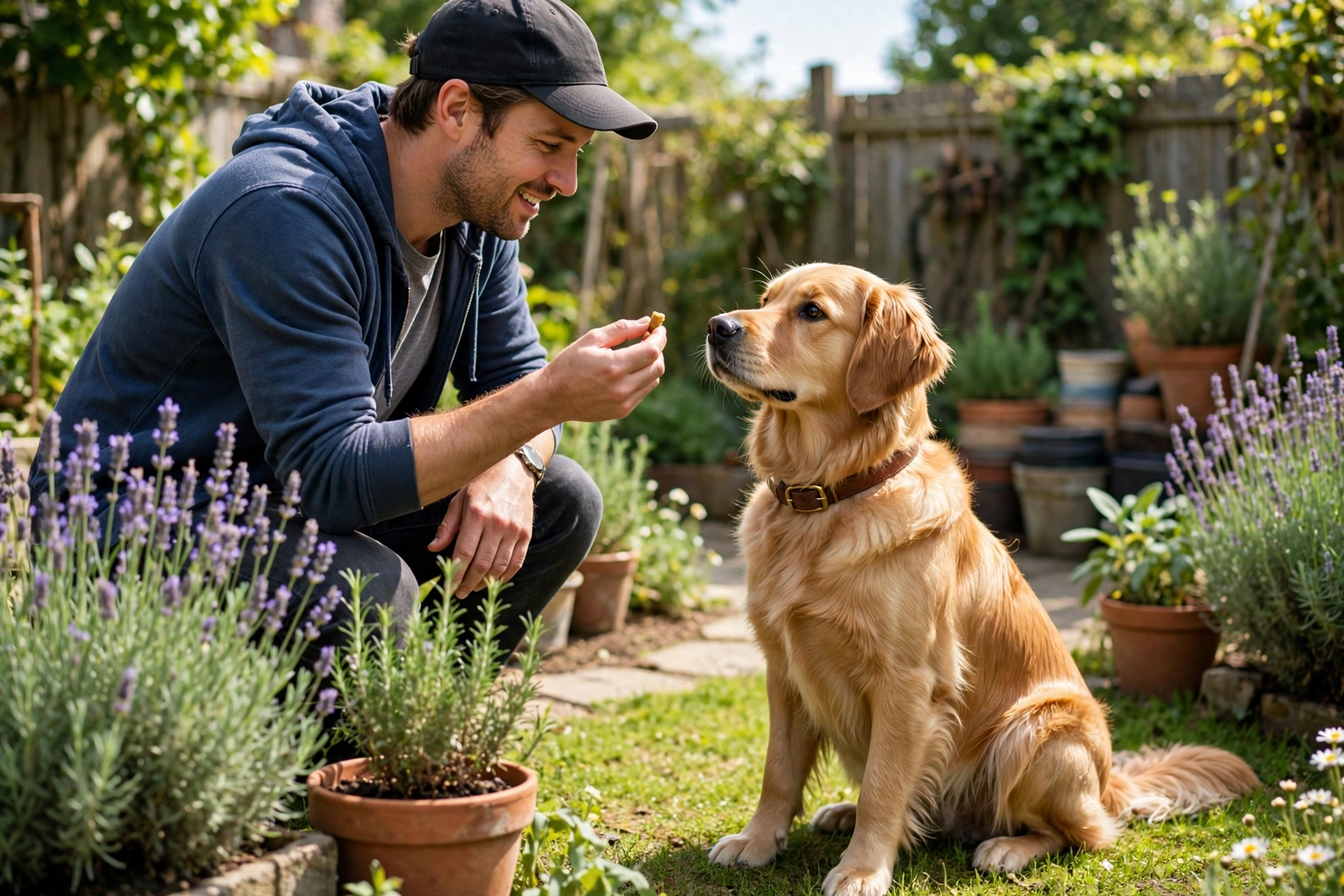
The quiet command is a useful tool, and it is easy to teach. Choose a word, such as “quiet” or “enough”, and use it consistently. Do not shout it, because shouting sounds like barking to a dog, and it will make the dog bark more. Say it calmly, in a normal voice.
To teach it, wait until your dog is barking, then say “quiet” once, in a calm voice. When your dog stops barking, even for a second, praise it and give it a treat. Repeat this many times, over days and weeks. Gradually, increase the time your dog must be quiet before it gets a treat: first one second, then two seconds, then five seconds, then ten seconds.
You can also teach the quiet command by first teaching your dog to bark on command, which sounds odd, but it works. Teach your dog to bark when you say “speak”, by rewarding it when it barks. Then, when it is barking, say “quiet”, and reward it when it stops. This gives you control over both barking and quiet.
Be patient. Teaching the quiet command takes time, and it will not work at once, especially when your dog is very excited. Practise in easy situations first, such as when your dog barks at a quiet sound, and build up to harder situations, such as when someone knocks at the door.
Stopping alarm barking at the door and window
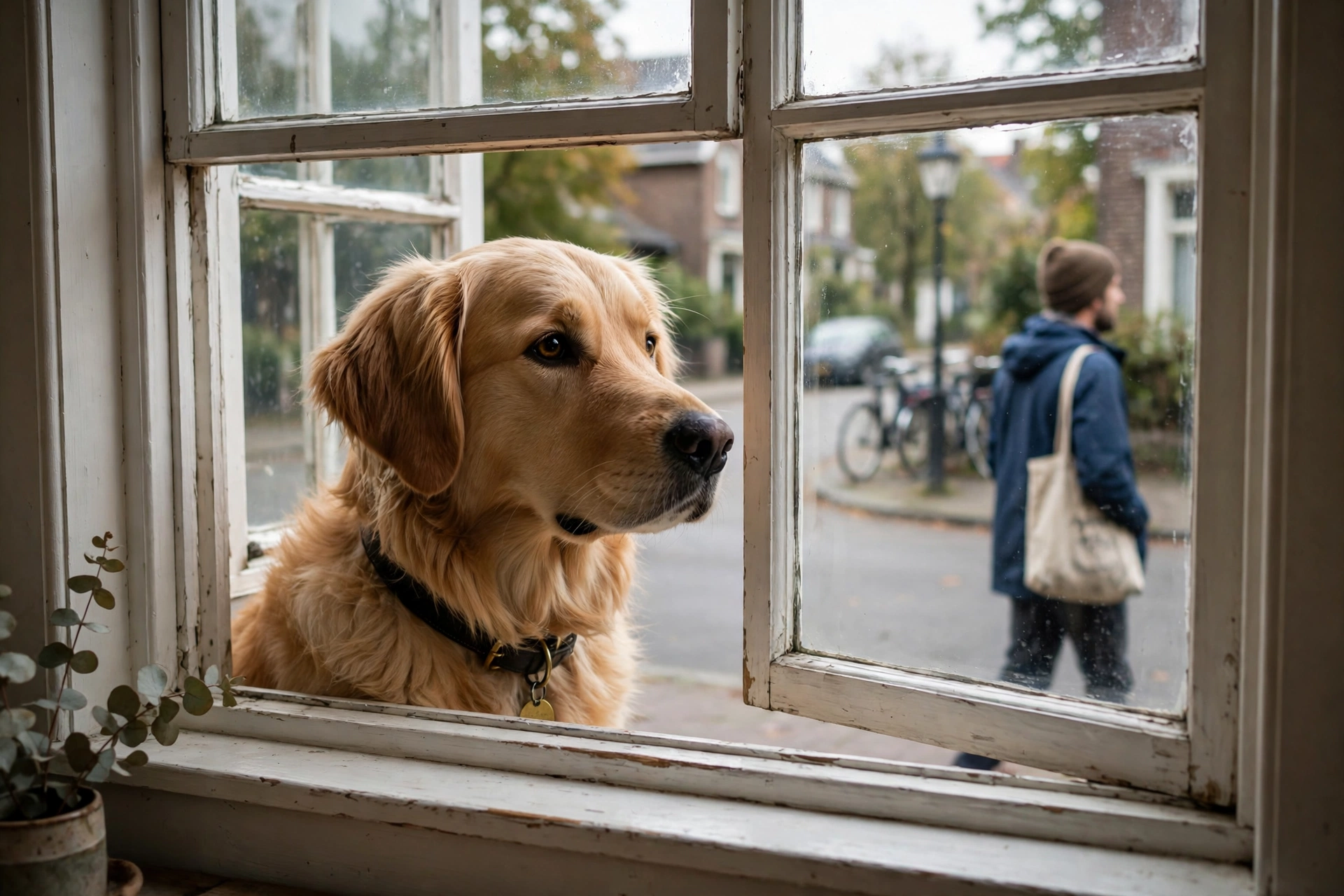
Alarm barking at the door, the window, or people passing the house is the most common barking problem. The first step is to reduce the triggers. If your dog barks at people passing the window, close the curtains, or put a film on the lower part of the window, so that your dog cannot see out. If your dog barks at the front garden, block its access to the front of the house when you are not there.
When someone knocks at the door, do not rush to answer it while your dog is barking. Wait until your dog is quiet, or take your dog to another room, and then answer the door. If you answer the door while your dog is barking, you reward the barking, and the dog learns that barking makes the door open.
Teach your dog to go to a place, such as its bed, when the doorbell rings. Practise this: ring the doorbell, send your dog to its bed, and reward it when it goes there and stays quiet. Repeat this many times, until your dog goes to its bed automatically when it hears the bell. This gives your dog a job to do, instead of barking.
For dogs that bark at people passing the house, desensitisation can help. Ask a friend to walk past the house, at a distance, and reward your dog for staying quiet. Gradually reduce the distance, over days and weeks. This teaches your dog that people passing are not a threat, and that quiet is rewarded.
Stopping attention barking and boredom barking
Attention barking is when your dog barks to get something: your attention, a toy, food, or a walk. The treatment is simple, but it takes consistency: ignore the barking completely, and reward quiet.
When your dog barks for attention, turn away, fold your arms, and do not look at it, speak to it, or touch it. Wait until it is quiet, even for a few seconds, then turn back, praise it, and give it attention. Repeat this every time. At first, the barking may get worse, because the dog tries harder to get your attention. This is normal, and it is called an extinction burst. Do not give in. If you give in after the dog has barked for ten minutes, you have taught it that barking for ten minutes works.
Boredom barking needs a different approach: give your dog more to do. A dog that is tired, and that has had exercise, play and mental stimulation, barks far less than a dog that is bored. Give your dog a good walk every day, play with it, and give it food puzzle toys, chews, and training sessions. A tired dog is a quiet dog.
If your dog barks when left alone, make sure it has had a walk and a toilet break before you leave, and leave it with a food puzzle toy. Do not leave it alone for longer than it can cope with, and consider a dog walker, a sitter, or day care if you are out for a long time.

Stopping fear barking
Fear barking is different, because the dog is frightened, and it needs reassurance, not punishment. Never punish a dog for barking from fear, because this makes the fear worse, and it can make the dog aggressive.
For fear barking, use desensitisation and counter conditioning. This means exposing your dog to the frightening thing, at a distance where it is not afraid, and pairing it with something good, such as a treat. For example, if your dog barks at strangers, ask a friend to stand at a distance, give your dog a treat, and repeat this over several days. Gradually reduce the distance, a little at a time, always keeping your dog below the point where it becomes frightened.
Do not force your dog to meet the thing it fears, and do not drag it towards a stranger or another dog. Let it approach in its own time, and reward calm behaviour. If your dog is very fearful, or if it is aggressive, work with a professional dog trainer or a veterinary behaviourist.
Calming aids, such as a pheromone diffuser, may help some dogs, but they are not a substitute for training. Ask your vet or behaviourist for advice.
What not to do
Never shout at your dog for barking. Shouting sounds like barking to a dog, and it will make the dog bark more. It also frightens the dog, and a frightened dog barks more, not less.
Never use a shock collar, a spray collar, or any other punishment device. These may stop the barking for a short time, but they cause fear and pain, and they do not teach the dog what to do instead. They can also make the dog aggressive, and they damage the trust between you and your dog.
Never punish your dog for barking after the event. If you come home and find that your dog has been barking, and you punish it, the dog will not understand why it is being punished, because the barking happened hours ago. It will only learn that your return means punishment.
Never use a muzzle to stop barking, unless your vet advises it for a specific reason. A muzzle stops the dog from barking, but it does not stop the fear or the boredom that causes the barking, and it can be dangerous if the dog is left alone with a muzzle on.
Supporting dogs who need care
Not every dog has an owner who can pay for training, veterinary treatment, or care. The Dog Hospital trust collects donations to pay for veterinary treatment, medicines, vaccinations and care for dogs in need. Your donation, large or small, helps a sick or injured dog get the treatment it deserves, and helps more dogs live healthy, happy lives.
You can donate through PayPal at vehari566@gmail.com, or by scanning the QR code below to donate through the trust’s TRC20 wallet. Every donation is voluntary, and keeping your payment receipt is a good idea. To learn more about the trust and how donations are used, visit the Donate page on this site. Thank you for helping dogs get treatment.
Donate Now
Donate Now
A daily plan to reduce barking
A simple daily plan that reduces barking is this: give your dog a good walk in the morning, and a good walk in the evening. Give it play and training during the day, and food puzzle toys when you are busy. Reduce the triggers: close the curtains if your dog barks at the window, and block access to the front of the house if your dog barks at passers by.
Practise the quiet command every day, in easy situations, and reward quiet behaviour whenever you see it. When your dog is lying quietly, praise it. When it is calm, give it a treat. This teaches your dog that quiet is good, and that it gets rewarded.
Keep a diary of your dog’s barking, and note whether it is getting better. It takes time, often weeks, to see a real change, and there will be good days and bad days. Be patient, be consistent, and do not give up.
If your dog barks at night, make sure it has been to the toilet before bed, that it has a comfortable bed, and that it is not cold or uncomfortable. A dog that barks at night may be in pain, or it may need to go to the toilet, or it may be frightened by noises. If night barking goes on, see your vet, to rule out pain or illness.
When to get professional help
If your dog’s barking does not improve after a few weeks of consistent training, if it is aggressive, if it is destructive, or if it is part of separation anxiety, get professional help. A qualified dog trainer, or a veterinary behaviourist, can assess your dog, find the cause, and make a training plan.
Your vet can also help, especially if the barking is caused by pain, by hearing loss, or by an age related condition. Older dogs sometimes bark more because they are confused, or because they are in pain, and these causes need veterinary treatment.
Be wary of anyone who promises a quick fix, or who suggests punishment. Good training takes time, and it is based on reward, not punishment. Ask for recommendations, and choose a trainer who uses kind, reward based methods.
Common mistakes in stopping barking
The most common mistake is rewarding barking by accident. If you give your dog attention, food, or a walk when it barks, you teach it to bark more. Be consistent: only reward quiet.
Another mistake is shouting. Shouting sounds like barking, and it makes the dog bark more. Speak calmly, and use a normal voice.
A third mistake is being inconsistent. If one person in the family ignores barking, and another person gives in, the dog will keep barking, because it sometimes works. Everyone in the family must follow the same rules.
A fourth mistake is expecting a quick fix. Barking is a habit, and habits take time to change. It may take weeks or months to see a real improvement, and there will be setbacks. Be patient, and keep going.
A fifth mistake is punishing fear barking. A dog that barks because it is frightened needs reassurance and desensitisation, not punishment. Punishment makes fear worse, and it can make the dog aggressive.
Conclusion
Excessive barking can be reduced, and often stopped, once you understand why your dog is barking. Find the cause, by keeping a diary and watching your dog. Never reward barking, and always reward quiet. Teach the quiet command, reduce the triggers, give your dog enough exercise and mental stimulation, and use desensitisation for fear barking. Never shout, never punish, and never use a shock collar. Be patient, be consistent, and get professional help if you need it. A dog that barks less is a happier dog, and a happier owner, and the effort is always worth it.
Donate Now
Donate Now
Frequently asked questions
Why does my dog bark so much?
Dogs bark to warn, to get attention, from boredom, from fear, during play, or because they are distressed at being left alone. Finding the cause is the first step, because the training is different for each cause.
How do I teach my dog the quiet command?
Say “quiet” once, in a calm voice, when your dog is barking. When it stops, even for a second, praise it and give it a treat. Repeat this many times, gradually increasing the quiet time before the reward.
Should I shout at my dog to stop barking?
No. Shouting sounds like barking to a dog, and it will make your dog bark more. Speak calmly, in a normal voice, and reward quiet instead.
Does ignoring barking work?
Yes, for attention barking, ignoring it completely and rewarding quiet is very effective, but you must be consistent. At first the barking may get worse, which is normal. Do not give in.
Should I use a shock collar to stop barking?
No. Shock collars and other punishment devices cause fear and pain, do not teach the dog what to do instead, and can make the dog aggressive. Use reward based training instead.
When should I get professional help for barking?
If the barking does not improve after a few weeks of consistent training, if your dog is aggressive or destructive, if it is part of separation anxiety, or if you suspect pain or illness, see a qualified trainer, a veterinary behaviourist, or your vet.


0 Comments